A room with less
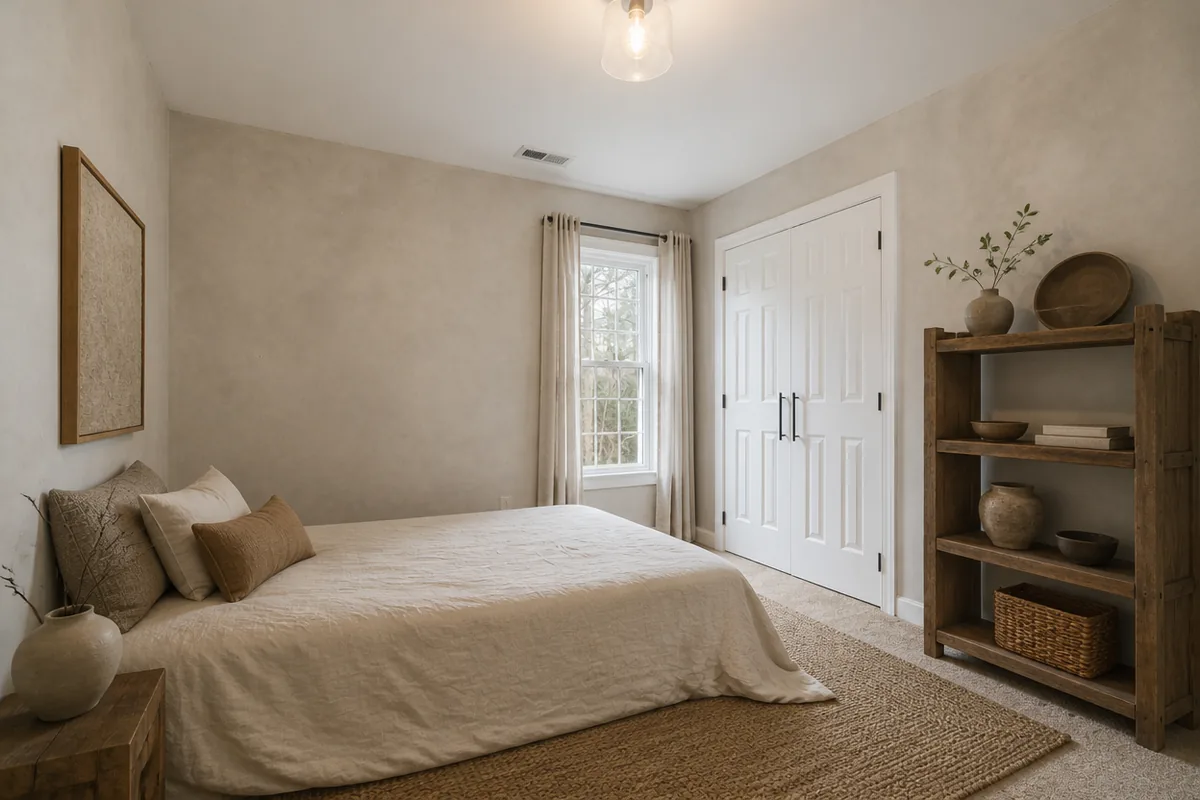
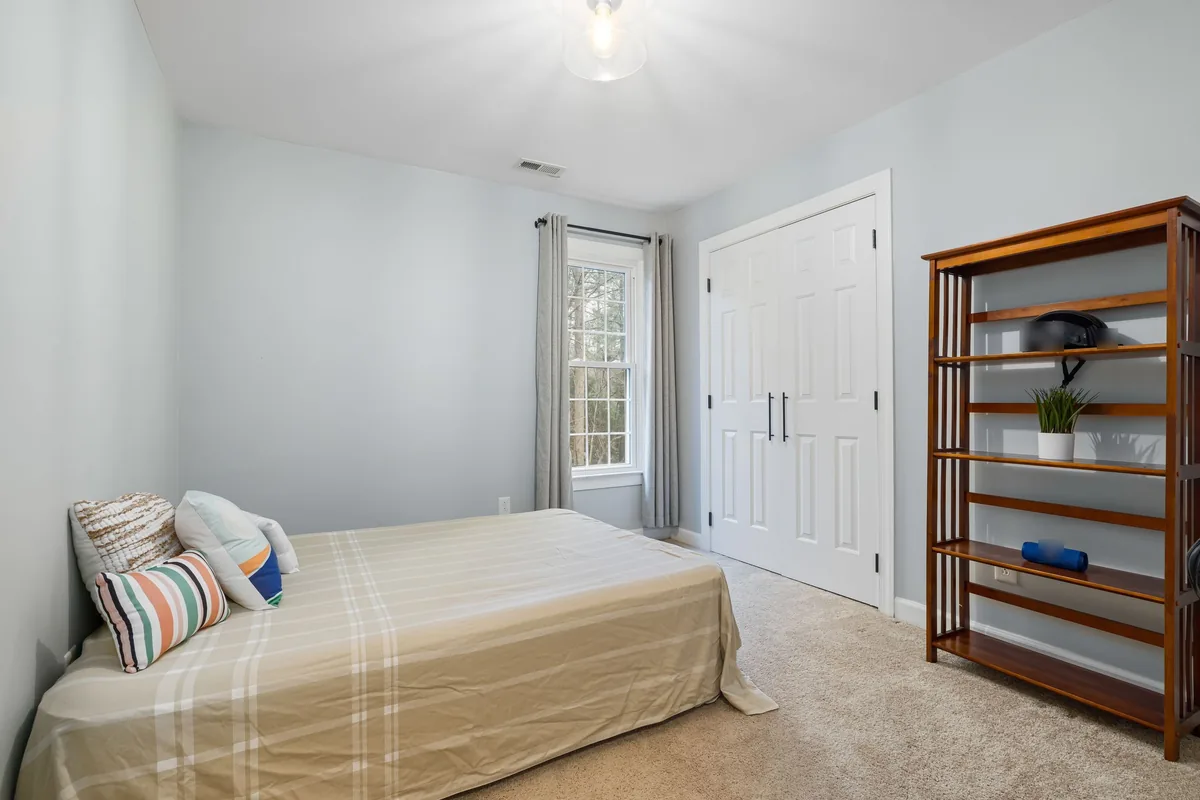
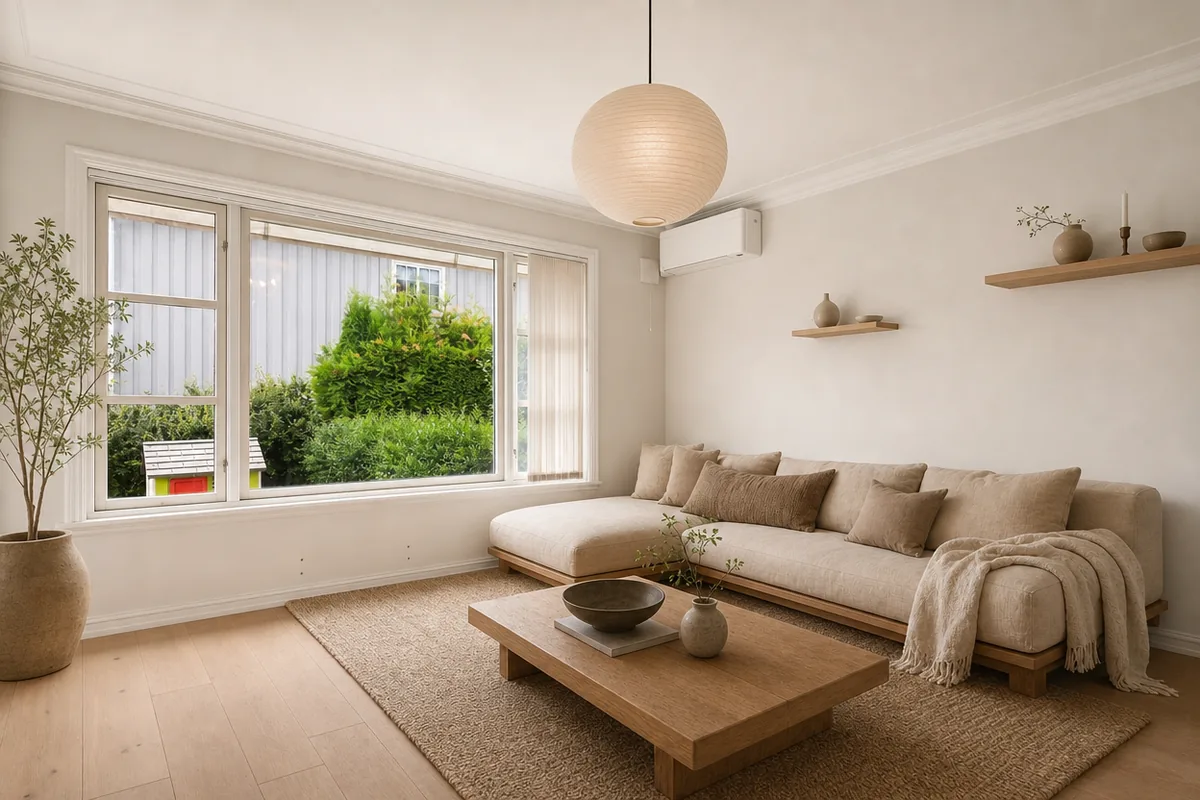
Japandi
Living Room. Oak, linen, and gentle light.
AI-generated example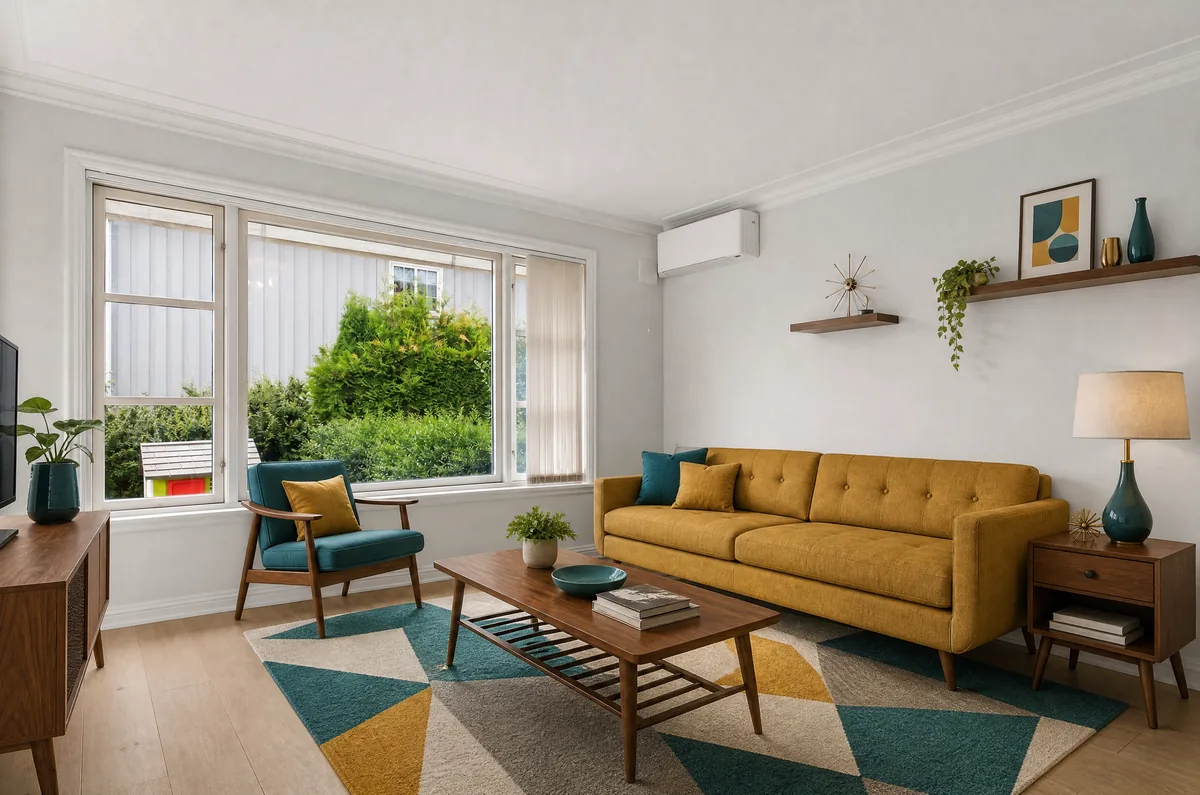
Mid-century
Living Room. Warm walnut and expressive shapes.
AI-generated example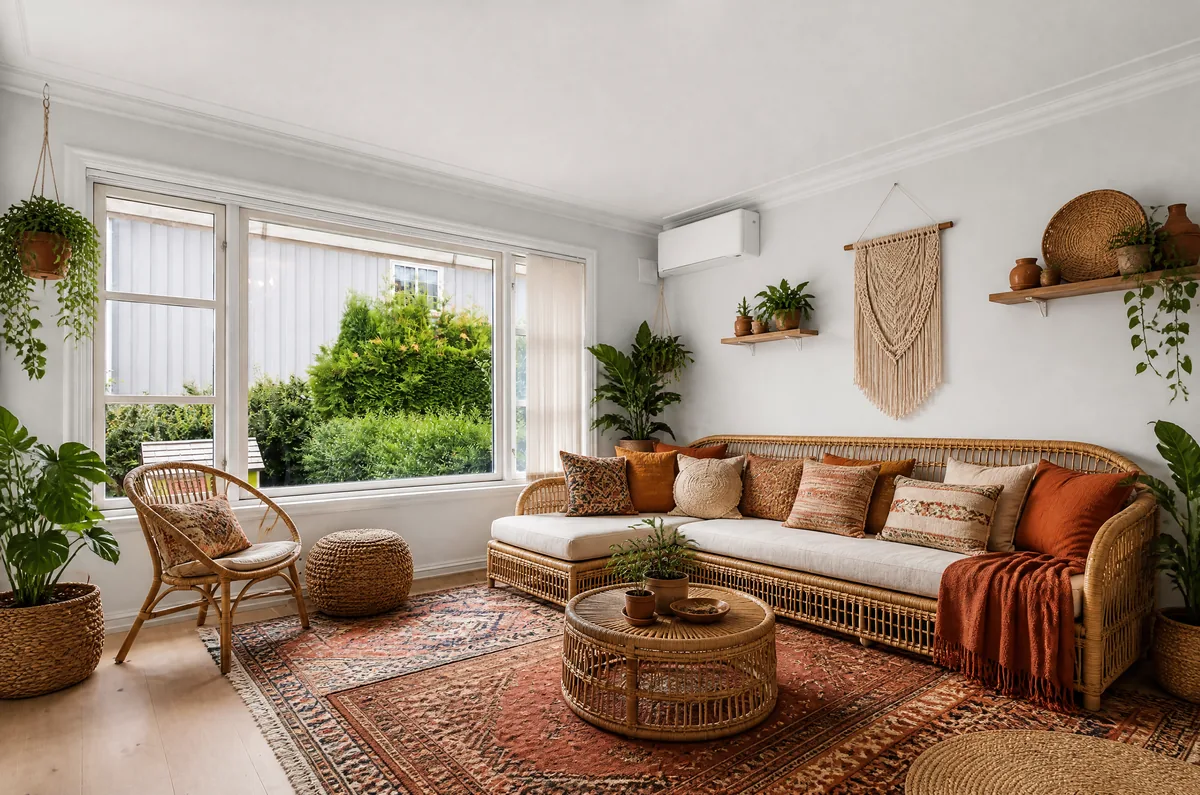
Boho
Living Room. Woven textures and layered color.
AI-generated exampleSee it in your space
Upload a room photoCompare four visual directions from one room photo, starting with one free watermarked image without account registration or a card. Our Room Pack costs $4.99 once for twenty images, with no subscription. Use the comparison for inspiration, then verify real dimensions separately.
What does minimalist mean in this tool?
Minimalist describes an image direction with fewer competing visual elements and clearer space around useful furnishings. It is not a judgement about how many possessions you should own. The comparison can help identify which objects dominate a view and which relationships feel calm.
Keep the functions your household needs. A room should not become less comfortable, accessible or practical merely to resemble a sparse generated photograph.
How can I simplify a room without replacing furniture?
Begin by examining arrangement and contrast. Move a small accessory, group related items or reduce one competing pattern before considering a large purchase. Photograph the real change from the same angle to judge its effect.
A model may achieve simplicity by deleting useful storage, so keep a record of what must remain. Often the practical task is organizing existing objects, not obtaining a completely new matching set.
Does a minimalist room have to be white?
No: visual simplicity can come from a limited range of relationships rather than a single pale color. Warm timber, muted green or a deeper wall can all form part of a restrained composition. Compare the contrast between major surfaces and the number of small accents.
Use physical samples to check how the palette behaves under your light. Digital images do not predict how reflective paint or textured fabric will look in person.
How should I judge empty floor space?
Judge empty space by circulation and comfort, not by how dramatic it looks in a picture. A generated room may seem open because the furniture has become unrealistically small or a doorway disappeared. Verify dimensions and compare fixed architectural edges with the original.
Keep enough useful seating and storage for real activities. The tool cannot infer accessibility needs or guarantee that the apparent clearance is sufficient for any particular use.
What details become more important with fewer objects?
Material quality, proportion and lighting become more noticeable when there are fewer distractions. A plain wall can reveal uneven lighting, while a simple table makes its scale prominent. Use the image to identify these relationships, then inspect real surfaces and objects directly.
A render can smooth defects and hide wear. It cannot establish the condition of a finish or the craftsmanship of a product that merely resembles the generated object.
How can I compare Minimalist and Wabi-sabi?
Compare the treatment of texture and irregularity. A minimalist direction may emphasize cleaner visual order; Wabi-sabi may retain more uneven natural texture and handmade character. Both are broad prompts rather than strict rules.
Keep the same photograph and inspect structure before judging mood. Take a small idea into the real room, then observe whether it supports your ordinary routines. A useful comparison should lead to a clearer decision, not a demand for a perfect photograph.
A few things to know
Is the first image free and does it need an account?
The intended live flow includes one watermarked image without account registration or a card. Email and verification protect the allowance.
What does Room Pack include?
Room Pack contains twenty image credits for a one-time $4.99 payment. It has no subscription or credit expiry. Each new standard or HD image uses one credit.
Can these images establish measurements or building feasibility?
No. A photograph and a generated comparison cannot replace dimensions, site information or appropriate professional advice. Check fixed openings and room proportions against the original before using a result as visual inspiration.
How are photos handled?
The browser re-encodes the complete frame without cropping and removes embedded location metadata. Stored inputs and results are private and expire after thirty days. Remove visible personal details and people from the scene before uploading.
What happens if an image is rejected or a pack is unused?
A confirmed failed or rejected generation returns its credit once. Fully unused packs are refundable within seven days; partly used packs do not qualify for that refund.
What happens to my photo?
The whole photo is retained and location metadata is removed. Personal redesigns, when available, use private storage with a 30-day expiry; existing examples do not transform your upload.