Picture the possibilities
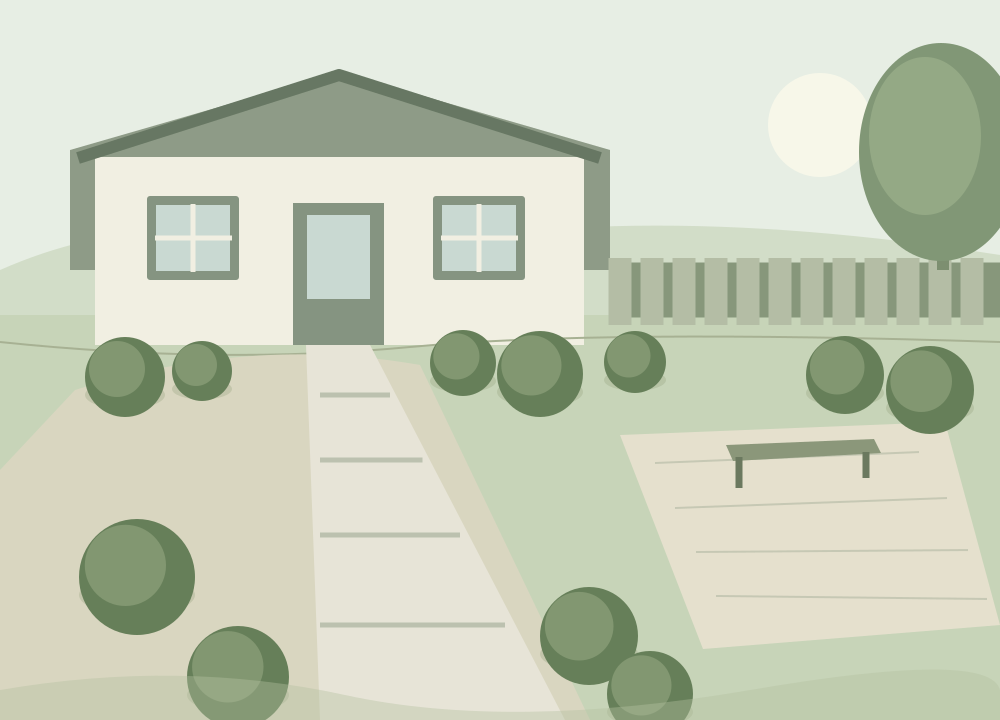
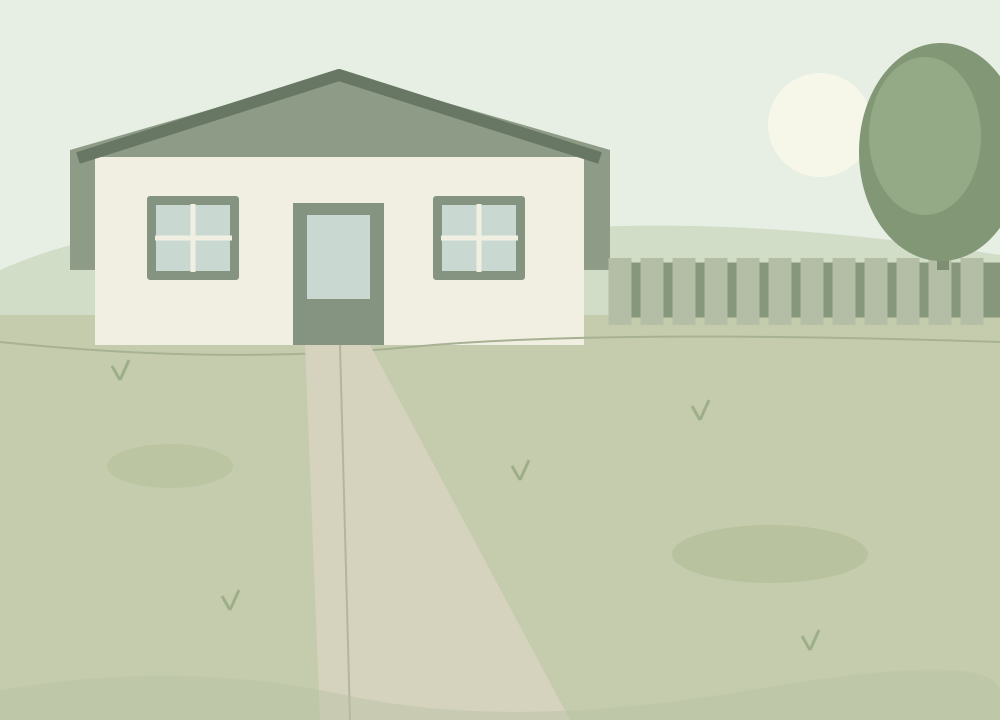
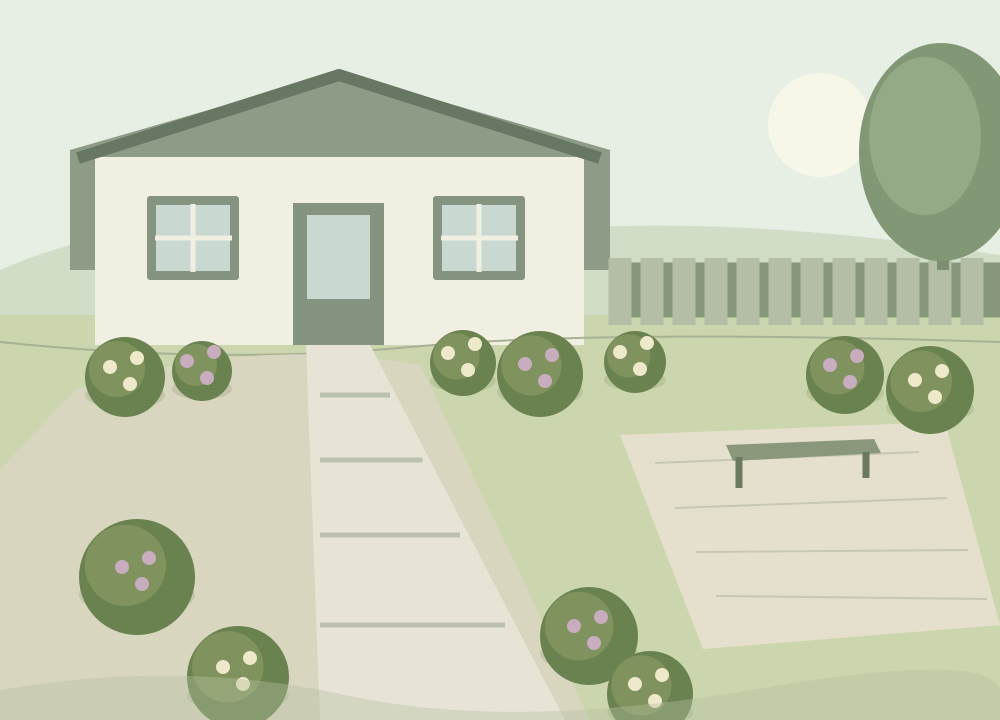
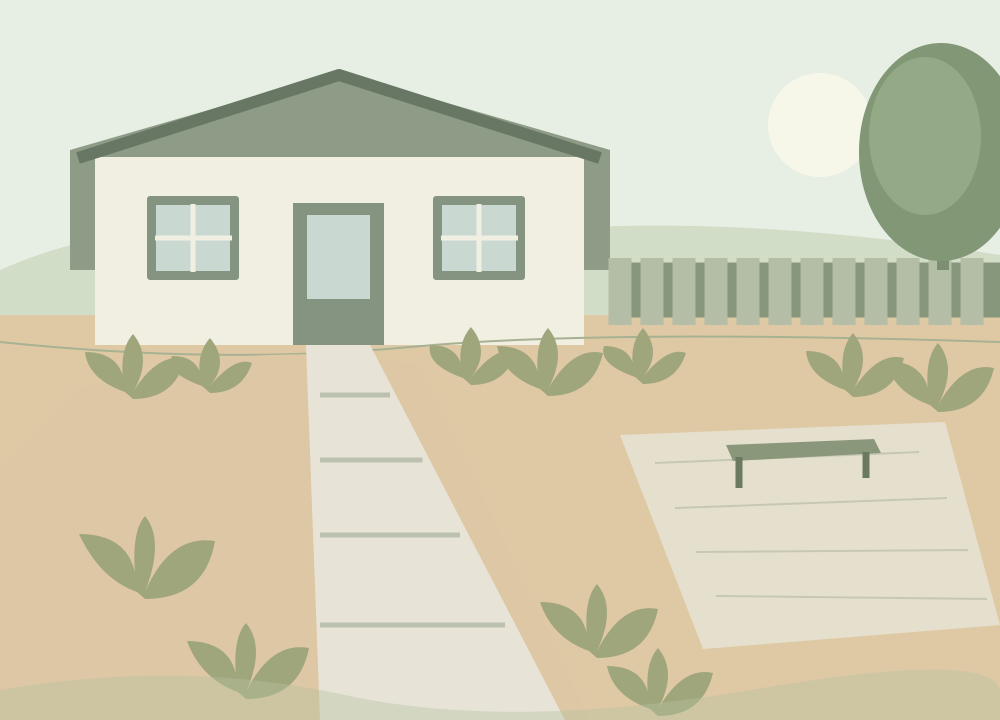
Sample placeholders show the comparison layout. Real project photos and generated results are still being prepared.
Begin with a defined scope of work
A meaningful estimate starts with a description of what will change and what will remain. Separate planting, surface materials, removal, drainage investigation, and installation work. Draw the boundaries of each proposed area on a measured sketch. Without that scope, a single total can conceal very different projects, from refreshing one bed to rebuilding the way water moves across the property.
Write down any unknowns beside the relevant item. Existing soil conditions, access for equipment, and disposal requirements may need assessment before a reliable installed quote is possible. Do not convert an unknown into zero simply because it is inconvenient to price. A useful preliminary estimate shows the gaps clearly enough that the next conversation with a supplier or contractor can resolve them.
Keep quantities and units together
Plants are usually counted by item, surface coverage is measured by area, and loose materials may be purchased by volume or weight. These units cannot be exchanged without an explicit conversion. If a material price is quoted per cubic yard, an area in square feet is not sufficient; the intended depth is also needed. Record the unit beside every quantity so the calculation remains understandable.
For an irregular bed, divide the shape into manageable sections and document how you measured them. Subtract existing features that will remain only when they are actually outside the new work. Avoid taking dimensions from an illustrative image, because perspective does not provide a dependable scale. A photograph can communicate intent while a measured sketch supplies the quantities the estimate requires.
Read the worked example as a calculation
The example on this page uses a stated yard scenario and reference material ranges. Each row follows the same logic: quantity multiplied by the lower unit amount gives the low subtotal, and quantity multiplied by the upper unit amount gives the high subtotal. Adding the respective subtotals produces the displayed range. The arithmetic is reproducible, but its usefulness still depends on the assumptions supplied.
A range is not a prediction that a real supplier will quote somewhere inside it. It is a way to show how the selected inputs affect a limited scenario. Source notes should distinguish a directly verified price from a preliminary reference. Before relying on a row, check the date, container or material specification, geographic relevance, and whether the listed amount is for materials alone.
Separate excluded work from optional choices
Labor, delivery, taxes, removal, equipment, irrigation changes, and site preparation may sit outside a material-only example. These are not interchangeable with optional decorative features. Keep two lists: items required to complete the stated project and enhancements you could choose to omit. This prevents a low material subtotal from appearing to represent a finished installation when essential work is still unpriced.
Ask contractors to describe exclusions and allowances in writing. If one quote assumes reuse of existing soil and another includes removal and replacement, their totals are answering different questions. Compare the scope line by line before comparing the final amount. The right next step may be clarifying an assumption rather than asking for a lower number on a project that has not yet been defined.
Use uncertainty to decide what to verify next
Identify the items that could most change the project. A small decorative container may not affect the overall direction, while unresolved drainage or difficult access could. Spend your planning effort on those uncertainties first. Record the source of every revised quantity and price so you can explain why the estimate changed. A transparent revision is more useful than a precise-looking total that cannot be traced.
Personal estimates are coming soon; use the worked example to understand the format and the assumptions behind it. For your own project, gather a measured scope and current local quotes, then decide what fits the available budget. Treat the result as a planning aid until the work, specifications, and responsibilities are agreed with the people who will supply or install it.
Plant candidates for zone 7b
This illustrative shortlist assumes zone 7b. These are climate-filtered candidates, not a planting prescription. Check sunlight, drainage, mature size, and local invasive-species guidance. Style matches are editorial suggestions.
| Plant | Type | USDA zones | Light | Mature height |
|---|---|---|---|---|
| Blue FescueFestuca glauca | Grass | 4–8.5 | full sun, partial shade | 0.75–1 ft1–1.5 ft wide |
| Feather Reed GrassCalamagrostis x acutiflora | Grass | 4–11.5 | full sun, partial shade | 3–5 ft1–2 ft wide |
| Japanese Forest GrassHakonechloa macra | Grass | 5–9.5 | partial shade, full shade | 1–1.5 ft1–2 ft wide |
| BearberryArctostaphylos uva-ursi | Groundcover | 3–7.5 | full sun, partial shade | 0.5–1 ft3–6 ft wide |
| Cloud-loving Hardy Ice PlantDelosperma nubigenum | Groundcover | 6–9.5 | full sun, partial shade | 0.1667–0.25 ft0.75–3 ft wide |
| Creeping PhloxPhlox subulata | Groundcover | 3–9.5 | full sun | 0.3333–0.5 ft2–3 ft wide |
| Adam's Needle YuccaYucca filamentosa | Perennial | 4–10.5 | full sun, partial shade | 3–8 ft3–5 ft wide |
| American AlumrootHeuchera americana | Perennial | 4–9.5 | full sun, partial shade | 1–3 ft1–1.5 ft wide |
| Anise HyssopAgastache foeniculum | Perennial | 4–8.5 | full sun, partial shade | 3–5 ft1.5–3 ft wide |
| American BeautyberryCallicarpa americana | Shrub | 6–10.5 | full sun, partial shade | 3–8 ft3–6 ft wide |
| Arrowwood ViburnumViburnum dentatum | Shrub | 2–8.5 | full sun, partial shade | 5–10 ft6–10 ft wide |
| Bigleaf HydrangeaHydrangea macrophylla | Shrub | 6–11.5 | partial shade, full shade | 3–6 ft3–6 ft wide |
| American ArborvitaeThuja occidentalis | Tree | 3–7.5 | full sun, partial shade | 40–60 ft10–15 ft wide |
| American HollyIlex opaca | Tree | 5–9.5 | full sun, partial shade | 40–60 ft10–20 ft wide |
| Chinese JuniperJuniperus chinensis | Tree | 4–9.5 | full sun | 50–60 ft10–20 ft wide |
| Crape MyrtleLagerstroemia indica | Tree | 6–9.5 | full sun | 6–30 ft6–30 ft wide |
Zone numbers ending in .5 mean the b half-zone; whole numbers mean the a half-zone. A matching cold range does not guarantee local suitability. Missing facts are shown as not verified.
A rough material budget, made visible
Illustrative 400 sq ft yard: 200 sq ft of mulched beds, 80 sq ft of paving, and 120 sq ft retained. Plant quantities below are example assumptions. This is a worked example; get local quotes for your own project.
| Material | Quantity | Unit range | Subtotal |
|---|---|---|---|
| 1-gallon perennial | 12 plants | $8–$15 | $96–$180 |
| 3-gallon shrub | 4 plants | $25–$45 | $100–$180 |
| Mulch | 200 sq ft | $0.20–$0.60 | $40–$120 |
| Paving material | 80 sq ft | $1–$25 | $80–$2,000 |
| Illustrative total | $316–$2,480 | ||
Rough estimate, not a quote. Excludes labor, tax, delivery, demolition, soil preparation, permits, and irrigation. Supplied planning ranges have not been independently price-verified for your location. Plant-price reference · Material-price reference. Confirm current supplier quotes before purchasing.
Questions about landscaping cost calculator
Is this an interactive landscaping cost calculator?
Personal estimates are coming soon. Use the worked material example to understand the calculation and prepare a measured scope for local quotes.
What does the low-to-high range represent?
It applies lower and upper reference unit amounts to the sample quantities. Check current local prices and the full installation scope before using those amounts for your own project.
Why are material quantities shown with units?
The unit determines the calculation. Counts, square feet, cubic yards, and weight cannot be substituted for one another without the appropriate measurement or conversion.
Can I estimate material quantities from an AI image?
Use a measured plan instead. A concept image does not establish reliable dimensions, material depth, waste allowances, or installation requirements.
How should I compare two landscaping quotes?
Compare the included work, specifications, quantities, assumptions, and exclusions first. Different scopes can explain a large difference between totals.
Sources and further reading
Original editorial guide. Examples are illustrative; check site-specific conditions with your local extension service.