Picture the possibilities
Sample placeholders show the comparison layout. Real project photos and generated results are still being prepared.
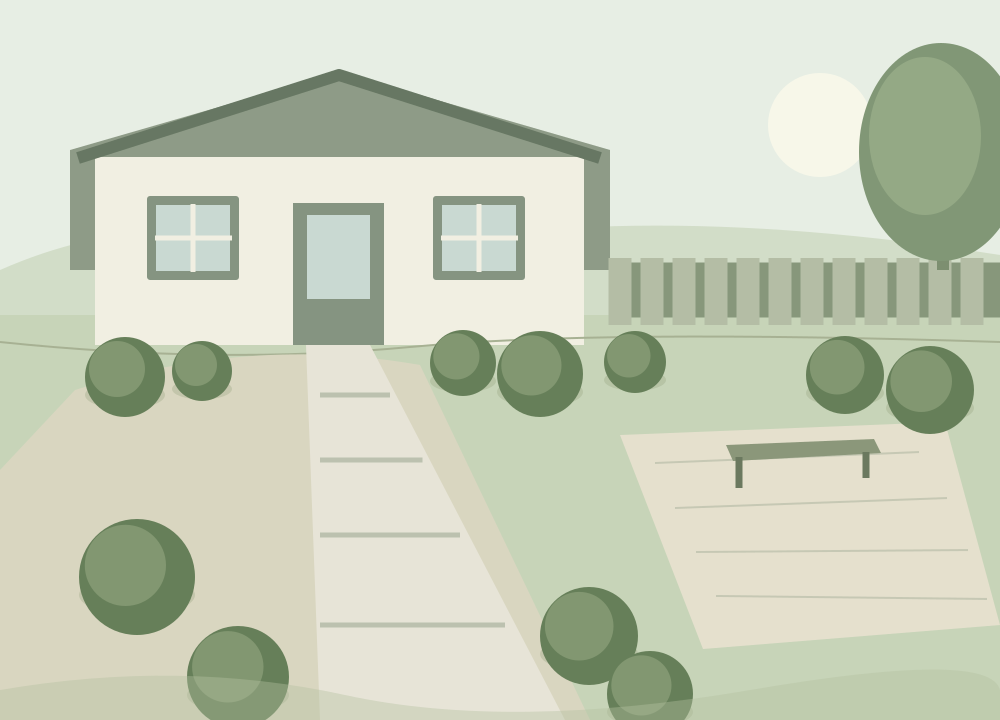
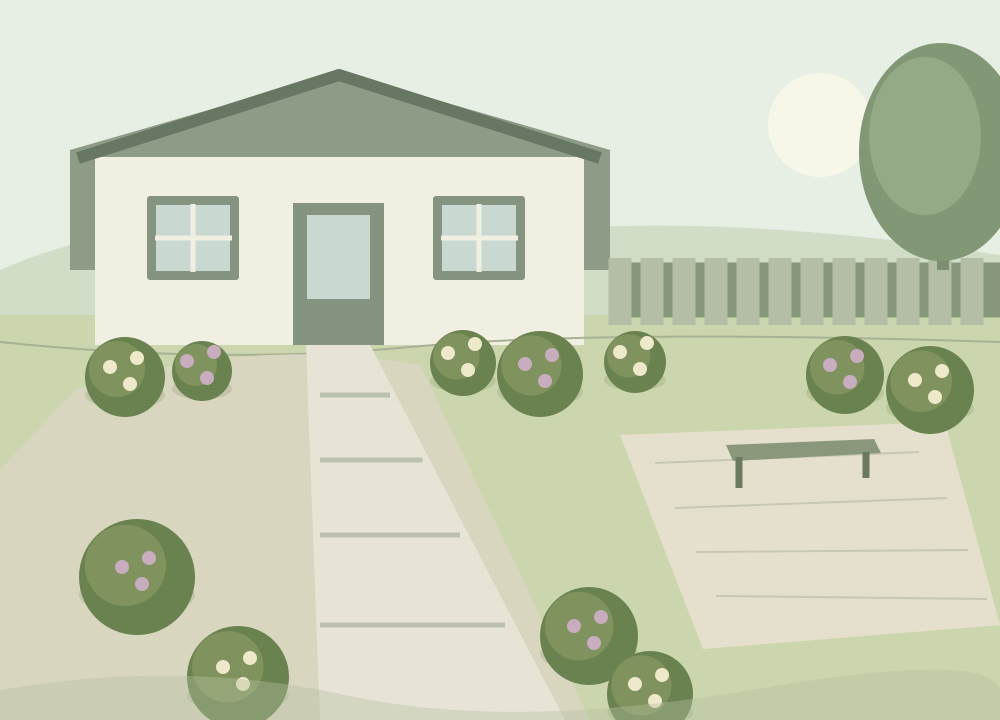
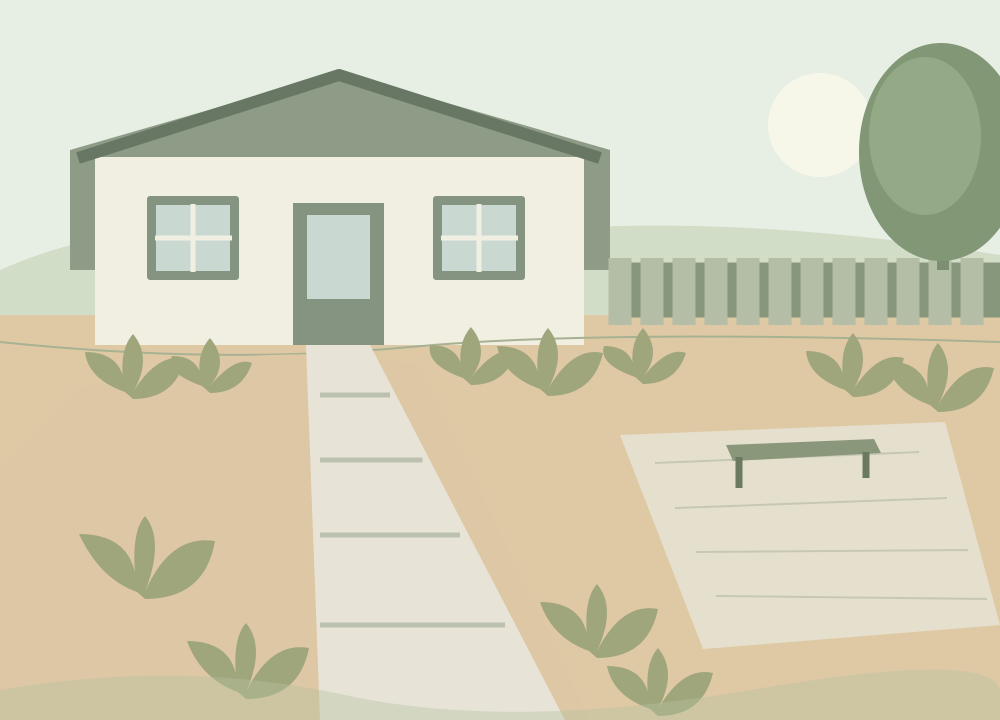
Choose the activity that deserves the most space
List what you expect to do outside in an ordinary week. Eating dinner, reading alone, playing with a child, and growing vegetables are all reasonable ambitions, but they compete for floor area. Rank them before drawing. The activity at the top should get the best location and enough room to function comfortably; the others can be smaller, flexible, or deferred.
Test the furniture arrangement with objects you already own. Place chairs where you imagine them, pull them out as if someone were sitting down, and walk behind them. Mark a proposed bed with a hose or removable tape. This simple rehearsal reveals whether a layout works with people in it, which is more useful than judging a photograph of an empty patio.
Keep circulation simple and connected
Draw the route from the back door to the gate, storage, and any frequently used service point. A small yard rarely benefits from a separate decorative path that duplicates this route. Let movement define the edge of the seating area or planting border, and avoid leftover slivers that are too narrow to use or maintain. The goal is a connected outdoor room, not a miniature collection of unrelated destinations.
Consider what happens when someone opens a door, carries a tray, or moves a bicycle through the space. Make those tasks easy without shifting several pieces of furniture. If a proposed feature interferes with daily access, change its location or remove it. You can often preserve the feeling you wanted through planting or a view rather than through another physical object.
Use boundaries without crowding the center
A fence or wall can provide a backdrop for planting, but it does not automatically make every climbing plant appropriate. Check how the plant attaches, how large it becomes, and whether the support and ownership arrangements suit it. A narrow freestanding screen may sometimes give the needed privacy more predictably than a vigorous plant that eventually needs substantial management.
Keep a portion of the center open enough to read as usable space. Group containers rather than lining every edge with separate pots, and make sure a watering route remains convenient. A bench can define the edge of a seating area while offering a place to rest. Evaluate each addition by the space it occupies when in use, not only by its dimensions in a catalog.
Select plants for their eventual footprint
In a small garden, an oversized shrub can affect the whole layout. Compare mature width with the actual bed depth, and account for branches that would lean into a chair or path. NC State Extension highlights mature size as a core selection factor. Choose a plant whose normal form fits the space rather than assuming repeated pruning will keep a large variety permanently small.
Use contrast deliberately. One substantial leaf shape or flowering group can be more readable than a crowded mixture of tiny accents. Leave some quiet background around the feature you want to notice. If the bed is shaded by surrounding buildings, choose from suitable shade plants instead of trying to reproduce a sun-filled reference image. The yard's conditions are part of the design brief.
Plan the view and the maintenance together
Look outside from the window you use most often and identify what appears at eye level. A carefully placed planting group can make that view feel considered even when the outdoor space is modest. Avoid assuming that a mirror, dark fence, or diagonal paving pattern will solve a poor layout; these details cannot replace the area needed for the activities you chose.
Before installation, decide where tools, cushions, and seasonal items will live. Small gardens can become storage overflow unless the plan accounts for them. Start with the main usable area and a manageable amount of planting, then observe what feels missing. The future photo tool may help compare appearances, but the current preview does not produce measured plans. Your on-site rehearsal remains the most direct test of whether a small-yard idea fits.
Plant candidates for zone 7b
This illustrative shortlist assumes zone 7b. These are climate-filtered candidates, not a planting prescription. Check sunlight, drainage, mature size, and local invasive-species guidance. Style matches are editorial suggestions.
| Plant | Type | USDA zones | Light | Mature height |
|---|---|---|---|---|
| Blue FescueFestuca glauca | Grass | 4–8.5 | full sun, partial shade | 0.75–1 ft1–1.5 ft wide |
| Feather Reed GrassCalamagrostis x acutiflora | Grass | 4–11.5 | full sun, partial shade | 3–5 ft1–2 ft wide |
| Japanese Forest GrassHakonechloa macra | Grass | 5–9.5 | partial shade, full shade | 1–1.5 ft1–2 ft wide |
| BearberryArctostaphylos uva-ursi | Groundcover | 3–7.5 | full sun, partial shade | 0.5–1 ft3–6 ft wide |
| Cloud-loving Hardy Ice PlantDelosperma nubigenum | Groundcover | 6–9.5 | full sun, partial shade | 0.1667–0.25 ft0.75–3 ft wide |
| Creeping StonecropPhedimus spurius | Groundcover | 3–9.5 | partial shade | 0.1667–0.5 ft2–3 ft wide |
| Adam's Needle YuccaYucca filamentosa | Perennial | 4–10.5 | full sun, partial shade | 3–8 ft3–5 ft wide |
| Dense Blazing StarLiatris spicata | Perennial | 3–8.5 | full sun | 3–6 ft0.25–1.5 ft wide |
| Japanese Painted FernAthyrium niponicum | Perennial | 4–9.5 | partial shade, full shade | 1.5–2 ft1.5–2 ft wide |
| Chinese Fringe FlowerLoropetalum chinense | Shrub | 7.5–9.5 | full sun, partial shade | 6–8 ft6–8 ft wide |
| Common BoxwoodBuxus sempervirens | Shrub | 5–8.5 | full sun, partial shade | 5–20 ft5–15 ft wide |
| Creeping JuniperJuniperus horizontalis | Shrub | 3–9.5 | full sun | 0.5–1.5 ft4–10 ft wide |
| American ArborvitaeThuja occidentalis | Tree | 3–7.5 | full sun, partial shade | 40–60 ft10–15 ft wide |
| Chinese JuniperJuniperus chinensis | Tree | 4–9.5 | full sun | 50–60 ft10–20 ft wide |
| Crape MyrtleLagerstroemia indica | Tree | 6–9.5 | full sun | 6–30 ft6–30 ft wide |
| GinkgoGinkgo biloba | Tree | 3–9.5 | full sun | 50–80 ft30–40 ft wide |
Zone numbers ending in .5 mean the b half-zone; whole numbers mean the a half-zone. A matching cold range does not guarantee local suitability. Missing facts are shown as not verified.
A rough material budget, made visible
Illustrative 400 sq ft yard: 200 sq ft of mulched beds, 80 sq ft of paving, and 120 sq ft retained. Plant quantities below are example assumptions. This is a worked example; get local quotes for your own project.
| Material | Quantity | Unit range | Subtotal |
|---|---|---|---|
| 1-gallon perennial | 12 plants | $8–$15 | $96–$180 |
| 3-gallon shrub | 4 plants | $25–$45 | $100–$180 |
| Mulch | 200 sq ft | $0.20–$0.60 | $40–$120 |
| Paving material | 80 sq ft | $1–$25 | $80–$2,000 |
| Illustrative total | $316–$2,480 | ||
Rough estimate, not a quote. Excludes labor, tax, delivery, demolition, soil preparation, permits, and irrigation. Supplied planning ranges have not been independently price-verified for your location. Plant-price reference · Material-price reference. Confirm current supplier quotes before purchasing.
Questions about small backyard ideas
How many activities should a small backyard support?
There is no universal number. Choose one primary activity, then add only supporting uses that fit without disrupting circulation or making setup inconvenient.
Will lots of small plants make a small yard feel bigger?
Not necessarily. A crowded collection can make the layout harder to read. Choose compatible mature sizes and use a few clear groups with space around them.
Are containers always easier than planting in the ground?
Containers can be flexible, but they still require suitable drainage, watering, and winter care. Consider their filled weight and the routine needed to maintain them.
How can I test a patio layout before installing it?
Mark the boundary on the ground and arrange real furniture inside it. Sit down, pull chairs back, and walk the normal routes through the yard.
Can I use a concept image to order paving quantities?
No. Measure the proposed area and obtain an installation specification separately. Image perspective and decorative edges do not establish construction quantities.
Sources and further reading
- NC State Extension: Landscape Design
- University of Arizona Cooperative Extension: Choosing the Right Plants
Original editorial guide. Examples are illustrative; check site-specific conditions with your local extension service.