Picture the possibilities
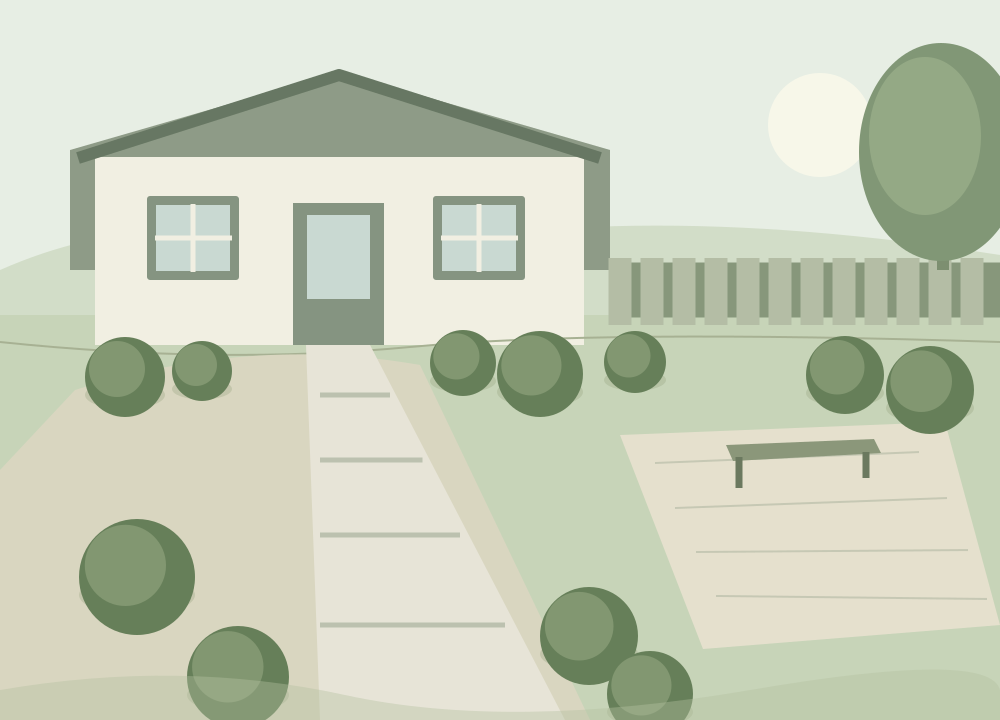
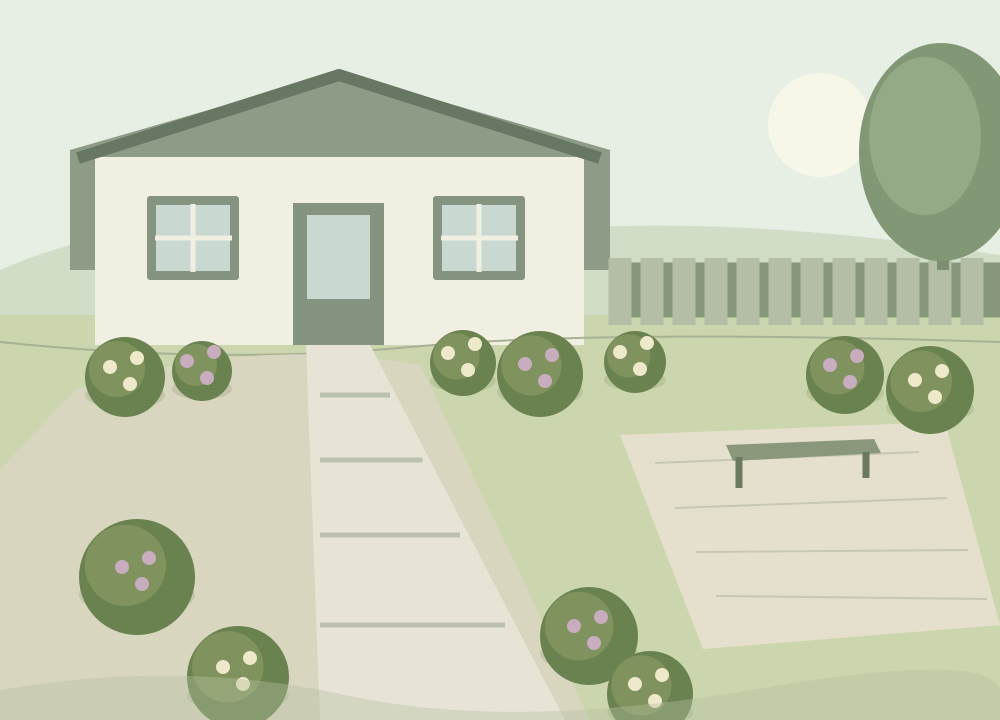
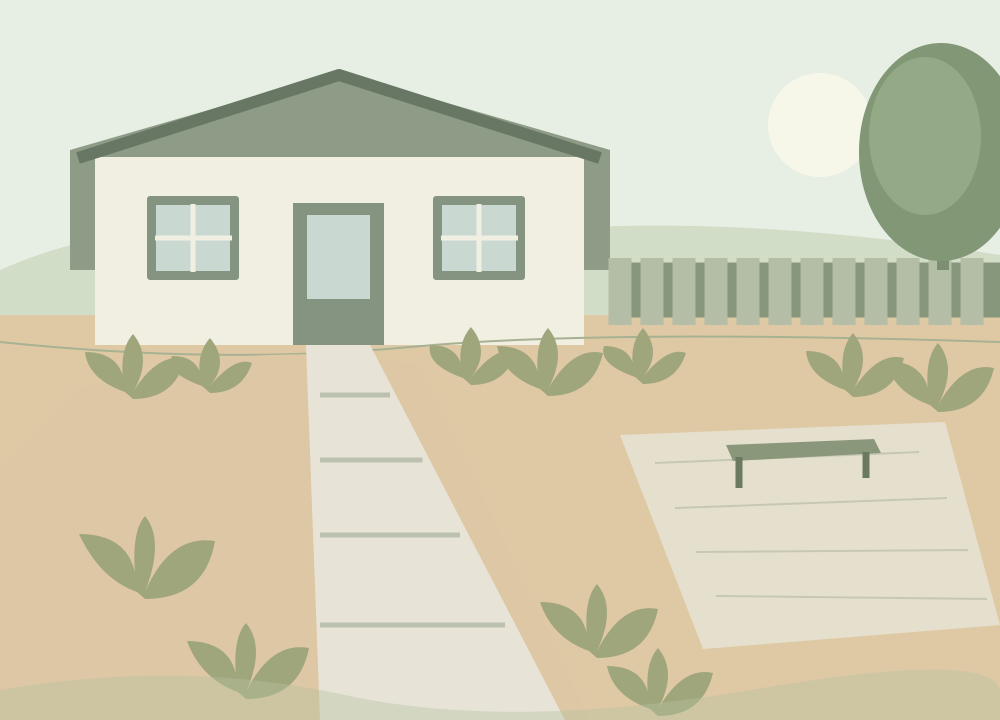
Sample placeholders show the comparison layout. Real project photos and generated results are still being prepared.

Put a calm framework beneath the abundance
Begin with the route through the garden and the places where you will stop. A simple path, a bench, or an entry opening can give abundant planting a clear setting. Keep the outline legible before adding flowers. When the framework is resolved, softer growth around it can feel intentional rather than like a bed that has gradually swallowed the usable space.
Choose a limited set of materials for those permanent features. You do not need several different rustic finishes to communicate an informal mood. Repeating one paving or edging character can hold the composition together while plants change through the year. Test the arrangement from the house as well as from the path, because a cottage garden often contributes to both close-up and distant views.
Build plant communities around real conditions
Divide the site into areas with similar light and moisture, then choose compatible plants for each area. A reference photo may place all its flowers together for visual effect, but your garden needs a workable growing arrangement. Use local guidance to confirm the exact species and cultivars, especially when a familiar common name refers to several plants with different habits.
Plan the broad shapes before collecting varieties. Decide which plants provide a taller backdrop, which fill the middle, and which soften the front edge without obstructing the path. There is no need for every bed to contain every layer. Repeat selected plants across the space so the eye can follow a rhythm instead of encountering an entirely new combination at every step.
Compose a sequence rather than one peak moment
Make a simple seasonal calendar for the proposed planting. Note when flowers appear, when foliage is attractive, and when a plant leaves an open patch or needs cutting back. Use that calendar to see where the display depends on too many plants reaching their best at the same time. A garden that changes gradually can be more satisfying than one brief burst followed by a long gap.
Think about the quiet months from your main window. Paths, branching, suitable evergreen plants, and retained seedheads where appropriate can contribute after flowering ends. Keep those decisions specific to the plants and the way you manage the garden. Seasonal character is not a reason to leave every plant untouched, just as tidiness is not a reason to remove every useful structural feature.
Allow fullness without forcing overcrowding
Place mature footprints on a measured sketch and identify how you will reach the center of each bed. An immediately full display may require plants to be moved or removed later. If you choose temporary fillers, mark them as temporary in your notes so the long-term structure does not become a competition among plants that all expect to stay.
Consider the tasks hidden inside the romantic appearance. Some plants need staking, deadheading, division, or careful management of seedlings. Decide which of those activities you enjoy and how much time the bed can receive. A smaller cottage border with a repeatable care routine can achieve the desired feeling without turning the entire property into a collection that is difficult to maintain.
Adapt the character to your own home
Use the qualities you like rather than attempting to reproduce an English garden plant for plant. Soft edges, layered flowers, a coherent color family, and a welcoming seat can be adapted to many settings. The actual palette must suit local heat, winter conditions, water, and soil. Check regional invasive-species guidance before bringing in a vigorous self-seeding or spreading plant.
For a first phase, complete one border visible from a frequently used place. Record which plants settle well and where the arrangement feels crowded or empty. Refine the next phase from that evidence. The examples here are planning illustrations and the photo generator is not yet available. A successful cottage garden brief describes both the atmosphere you want and the care you are prepared to give it.
Plant candidates for zone 7b
This illustrative shortlist assumes zone 7b. These are climate-filtered candidates, not a planting prescription. Check sunlight, drainage, mature size, and local invasive-species guidance. Style matches are editorial suggestions.
| Plant | Type | USDA zones | Light | Mature height |
|---|---|---|---|---|
| Blue FescueFestuca glauca | Grass | 4–8.5 | full sun, partial shade | 0.75–1 ft1–1.5 ft wide |
| Feather Reed GrassCalamagrostis x acutiflora | Grass | 4–11.5 | full sun, partial shade | 3–5 ft1–2 ft wide |
| Japanese Forest GrassHakonechloa macra | Grass | 5–9.5 | partial shade, full shade | 1–1.5 ft1–2 ft wide |
| Creeping PhloxPhlox subulata | Groundcover | 3–9.5 | full sun | 0.3333–0.5 ft2–3 ft wide |
| Creeping PhloxPhlox stolonifera | Groundcover | 4–8.5 | full sun, partial shade, full shade | 0.5–1 ft0.75–1.5 ft wide |
| Creeping ThymeThymus serpyllum | Groundcover | 4–9.5 | full sun | 0.1667–0.25 ft0.25–0.8333 ft wide |
| American AlumrootHeuchera americana | Perennial | 4–9.5 | full sun, partial shade | 1–3 ft1–1.5 ft wide |
| Anise HyssopAgastache foeniculum | Perennial | 4–8.5 | full sun, partial shade | 3–5 ft1.5–3 ft wide |
| August LilyHosta plantaginea | Perennial | 3–9.5 | full sun, partial shade, full shade | 1–2 ft3–4 ft wide |
| American BeautyberryCallicarpa americana | Shrub | 6–10.5 | full sun, partial shade | 3–8 ft3–6 ft wide |
| Arrowwood ViburnumViburnum dentatum | Shrub | 2–8.5 | full sun, partial shade | 5–10 ft6–10 ft wide |
| Bigleaf HydrangeaHydrangea macrophylla | Shrub | 6–11.5 | partial shade, full shade | 3–6 ft3–6 ft wide |
| Downy ServiceberryAmelanchier arborea | Tree | 4–9.5 | full sun, partial shade | 15–25 ft10–15 ft wide |
| Eastern RedbudCercis canadensis | Tree | 4–9.5 | full sun, partial shade | 20–30 ft25–35 ft wide |
| Flowering DogwoodCornus florida | Tree | 5–9.5 | full sun, partial shade | 15–25 ft15–30 ft wide |
| Sweetbay MagnoliaMagnolia virginiana | Tree | 5–10.5 | full sun, partial shade | 10–35 ft10–35 ft wide |
Zone numbers ending in .5 mean the b half-zone; whole numbers mean the a half-zone. A matching cold range does not guarantee local suitability. Missing facts are shown as not verified.
A rough material budget, made visible
Illustrative 400 sq ft yard: 200 sq ft of mulched beds, 80 sq ft of paving, and 120 sq ft retained. Plant quantities below are example assumptions. This is a worked example; get local quotes for your own project.
| Material | Quantity | Unit range | Subtotal |
|---|---|---|---|
| 1-gallon perennial | 12 plants | $8–$15 | $96–$180 |
| 3-gallon shrub | 4 plants | $25–$45 | $100–$180 |
| Mulch | 200 sq ft | $0.20–$0.60 | $40–$120 |
| Paving material | 80 sq ft | $1–$25 | $80–$2,000 |
| Illustrative total | $316–$2,480 | ||
Rough estimate, not a quote. Excludes labor, tax, delivery, demolition, soil preparation, permits, and irrigation. Supplied planning ranges have not been independently price-verified for your location. Plant-price reference · Material-price reference. Confirm current supplier quotes before purchasing.
Questions about cottage garden
Does a cottage garden need a large collection of different plants?
No. Repetition can create an abundant but coherent effect. Begin with compatible plants that suit the site and add variety only where it contributes to the composition.
Can I make a cottage garden in a small yard?
Yes, if the plant sizes and access fit. A single well-planned border can express the style without filling every available surface.
Is cottage planting low maintenance?
That depends on the plants and the appearance you expect. Staking, cutting back, division, and seedling management can all be part of the routine.
Do I need traditional English garden species?
No. Adapt the informal layering and seasonal character with locally suitable plants instead of copying species that may struggle in your conditions.
How do I stop flowers from blocking the path?
Check mature spread, leave a realistic setback, and choose front-edge plants whose normal habit fits. Keep access visible in the initial plan.
Sources and further reading
Original editorial guide. Examples are illustrative; check site-specific conditions with your local extension service.