Picture the possibilities
Sample placeholders show the comparison layout. Real project photos and generated results are still being prepared.
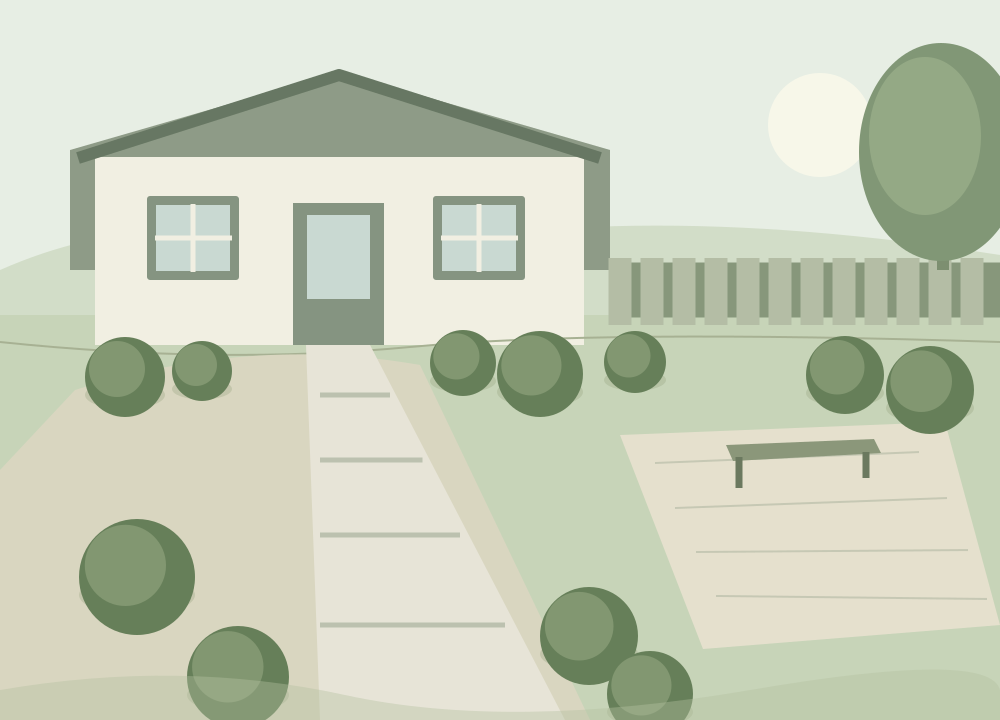
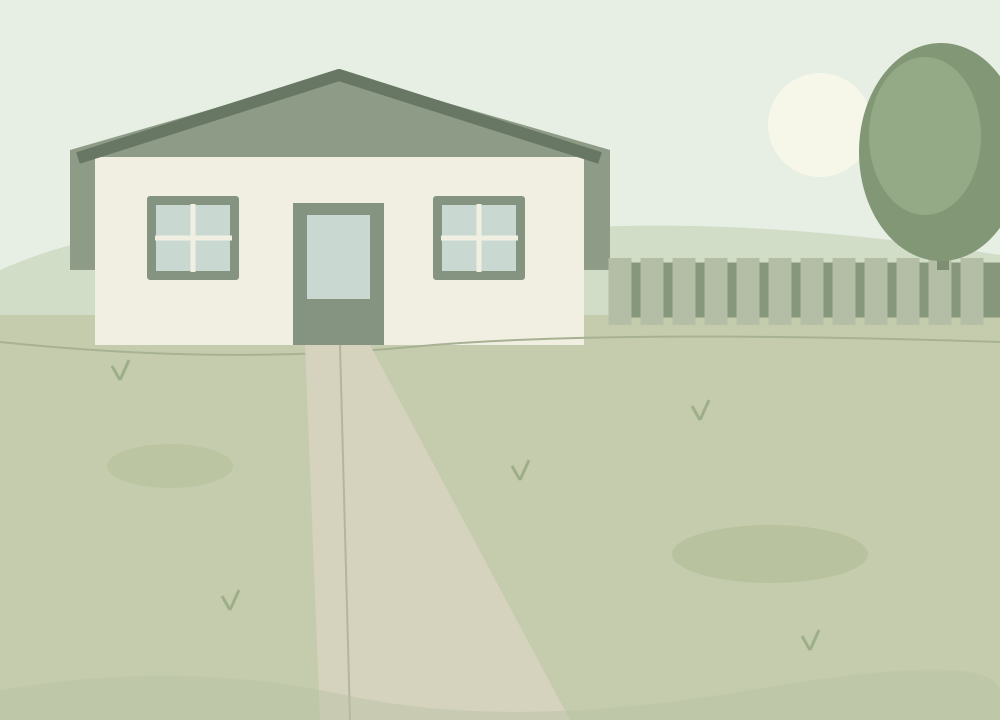
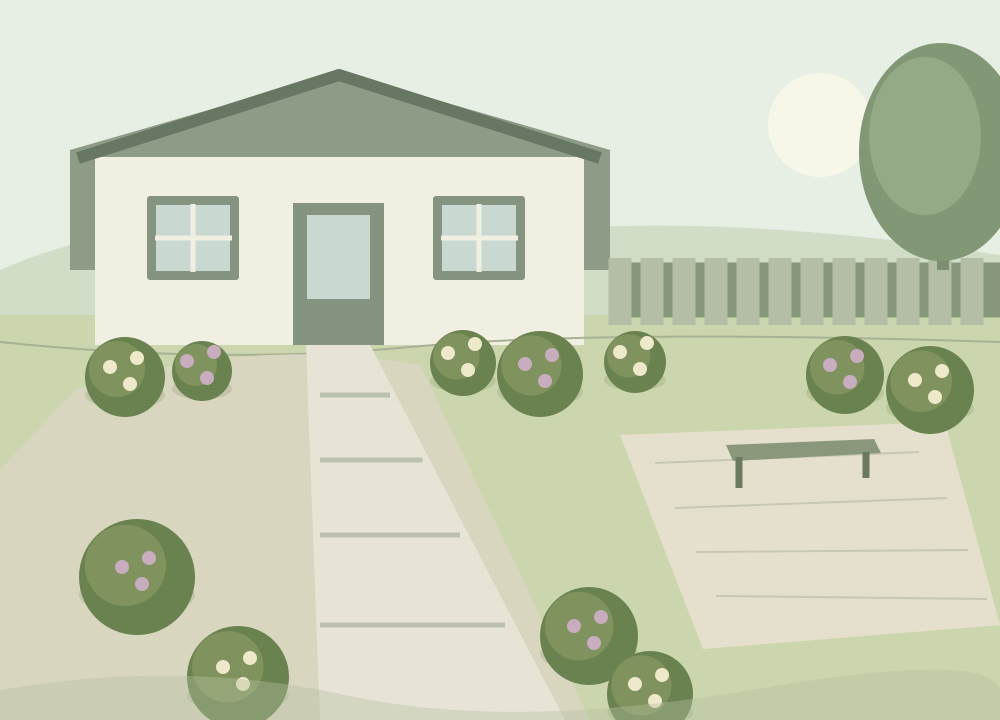
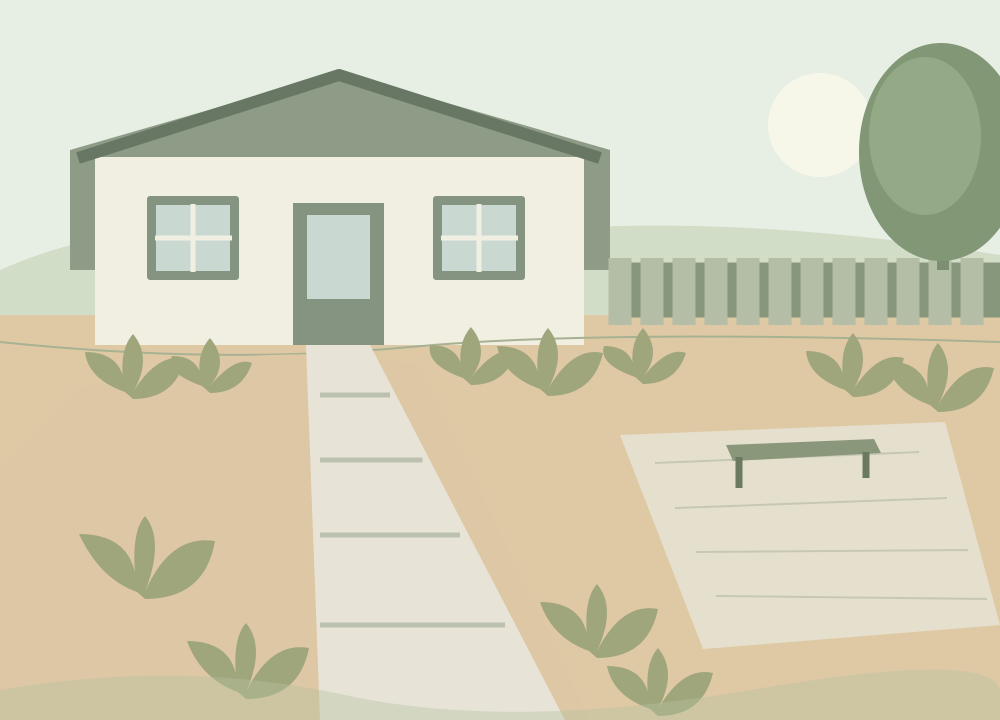
Read the 7b label alongside the actual site
USDA 7b is the warmer half of zone 7, but that description does not tell you how every corner of the property behaves. A low spot, an exposed boundary, and a sheltered bed beside the house can offer different conditions. Keep a record of these locations and the plants already performing in them before you select a large new planting scheme.
Use the zone as an efficient first filter rather than as the whole decision. Once a candidate meets the cold range, ask whether its summer conditions, soil requirements, and eventual size fit the intended position. This order helps prevent a common planning problem: falling in love with a flower and then trying to invent a suitable place for the plant afterward.
Give the garden a framework before filling borders
Decide which elements will define the garden when the main flowers are absent. A small tree where space permits, a well-placed shrub group, and the outline of paths can do more for year-round coherence than a large assortment of seasonal accents. Choose those larger roles first because they will influence shade, root space, and views for the surrounding planting.
Consider the view from inside the home. A border seen daily through a window deserves a different arrangement from one visited only during summer evenings. Keep important sightlines open and select mature forms that fit without repeated size correction. If a screen is needed, decide when privacy matters most; a deciduous option and an evergreen option offer different seasonal experiences.
Choose perennials as groups with a sequence
For flowering borders, record when each candidate contributes and what remains after the flowers fade. Try to avoid a plan in which every plant performs briefly at the same time, leaving the rest of the season unresolved. A repeated group with useful foliage may connect the display more effectively than another isolated flower color.
Keep the combinations horticulturally compatible. Plants placed together should have workable relationships in light, moisture, and space. Where conditions change across a bed, adjust the palette rather than treating the whole border as uniform. The example list can help you identify possibilities, but the exact selection depends on the local site and the maintenance routine you are willing to support.
Make cold-edge decisions deliberately
When a plant sits near the colder edge of its stated range, consider how important its long-term role is. A replaceable seasonal accent presents a different decision from the only tree intended to shade a patio. Discuss the precise cultivar and location with a knowledgeable regional source. A favorable map label does not tell you how a particular specimen will respond to every unusual winter.
Containers also deserve a separate plan. Their growing situation differs from plants rooted in the ground, so do not transfer an in-ground hardiness assumption without checking appropriate guidance. Consider winter handling, drainage, weight, and the effort of moving a mature container. Choose the location and maintenance method before building the design around a pot that may be difficult to manage.
Turn the filtered list into a practical first phase
Review the plant table by role and mature dimensions. Select a small number of candidates for the space available, then verify botanical identity, cultivar details, and regional invasive-species guidance. Make a measured sketch showing how much room each group receives. The table's cold filter is useful, but the layout is where you discover whether those individually suitable plants actually fit together.
Start with one connected area and record what you learn during establishment. Note where watering is awkward, which foliage remains useful between flowering periods, and where growth differs from your expectation. Use those observations before expanding. This guide provides an example shortlist rather than a personalized prescription; the official USDA map and local extension guidance are the next resources for resolving site-specific choices.
Plant candidates for zone 7b
This page uses zone 7b. These are climate-filtered candidates, not a planting prescription. Check sunlight, drainage, mature size, and local invasive-species guidance. Style matches are editorial suggestions.
| Plant | Type | USDA zones | Light | Mature height |
|---|---|---|---|---|
| Blue FescueFestuca glauca | Grass | 4–8.5 | full sun, partial shade | 0.75–1 ft1–1.5 ft wide |
| Feather Reed GrassCalamagrostis x acutiflora | Grass | 4–11.5 | full sun, partial shade | 3–5 ft1–2 ft wide |
| Japanese Forest GrassHakonechloa macra | Grass | 5–9.5 | partial shade, full shade | 1–1.5 ft1–2 ft wide |
| BearberryArctostaphylos uva-ursi | Groundcover | 3–7.5 | full sun, partial shade | 0.5–1 ft3–6 ft wide |
| Cloud-loving Hardy Ice PlantDelosperma nubigenum | Groundcover | 6–9.5 | full sun, partial shade | 0.1667–0.25 ft0.75–3 ft wide |
| Creeping PhloxPhlox subulata | Groundcover | 3–9.5 | full sun | 0.3333–0.5 ft2–3 ft wide |
| Adam's Needle YuccaYucca filamentosa | Perennial | 4–10.5 | full sun, partial shade | 3–8 ft3–5 ft wide |
| American AlumrootHeuchera americana | Perennial | 4–9.5 | full sun, partial shade | 1–3 ft1–1.5 ft wide |
| Anise HyssopAgastache foeniculum | Perennial | 4–8.5 | full sun, partial shade | 3–5 ft1.5–3 ft wide |
| American BeautyberryCallicarpa americana | Shrub | 6–10.5 | full sun, partial shade | 3–8 ft3–6 ft wide |
| Arrowwood ViburnumViburnum dentatum | Shrub | 2–8.5 | full sun, partial shade | 5–10 ft6–10 ft wide |
| Bigleaf HydrangeaHydrangea macrophylla | Shrub | 6–11.5 | partial shade, full shade | 3–6 ft3–6 ft wide |
| American ArborvitaeThuja occidentalis | Tree | 3–7.5 | full sun, partial shade | 40–60 ft10–15 ft wide |
| American HollyIlex opaca | Tree | 5–9.5 | full sun, partial shade | 40–60 ft10–20 ft wide |
| Chinese JuniperJuniperus chinensis | Tree | 4–9.5 | full sun | 50–60 ft10–20 ft wide |
| Crape MyrtleLagerstroemia indica | Tree | 6–9.5 | full sun | 6–30 ft6–30 ft wide |
Zone numbers ending in .5 mean the b half-zone; whole numbers mean the a half-zone. A matching cold range does not guarantee local suitability. Missing facts are shown as not verified.
A rough material budget, made visible
Illustrative 400 sq ft yard: 200 sq ft of mulched beds, 80 sq ft of paving, and 120 sq ft retained. Plant quantities below are example assumptions. This is a worked example; get local quotes for your own project.
| Material | Quantity | Unit range | Subtotal |
|---|---|---|---|
| 1-gallon perennial | 12 plants | $8–$15 | $96–$180 |
| 3-gallon shrub | 4 plants | $25–$45 | $100–$180 |
| Mulch | 200 sq ft | $0.20–$0.60 | $40–$120 |
| Paving material | 80 sq ft | $1–$25 | $80–$2,000 |
| Illustrative total | $316–$2,480 | ||
Rough estimate, not a quote. Excludes labor, tax, delivery, demolition, soil preparation, permits, and irrigation. Supplied planning ranges have not been independently price-verified for your location. Plant-price reference · Material-price reference. Confirm current supplier quotes before purchasing.
Questions about zone 7b plants
What is the winter temperature band for zone 7b?
The USDA map assigns 7b to an average annual extreme minimum winter temperature of 5 to 10 degrees Fahrenheit.
Can I use plants described broadly as zone 7 perennials?
They may be candidates, but confirm the exact species or cultivar range and the site requirements. A broad zone label does not settle light, moisture, or mature size.
What distinguishes 7b from 7a?
Zone 7b is the warmer five-degree half of zone 7; 7a is the colder half. Use the official map for the actual property location.
Should I prioritize shrubs or perennials?
Choose according to the role you need. Structural planting shapes the garden over time, while perennials can add seasonal interest within that framework.
Can I leave any zone 7b plant in a pot through winter?
Check container-specific guidance for the plant and location. Above-ground roots experience different conditions from roots in the garden soil.
Sources and further reading
- USDA: National Map and Temperature Legend
- USDA: How to Use the Maps
- NC State Extension: Landscape Design
Original editorial guide. Examples are illustrative; check site-specific conditions with your local extension service.