Picture the possibilities
Sample placeholders show the comparison layout. Real project photos and generated results are still being prepared.
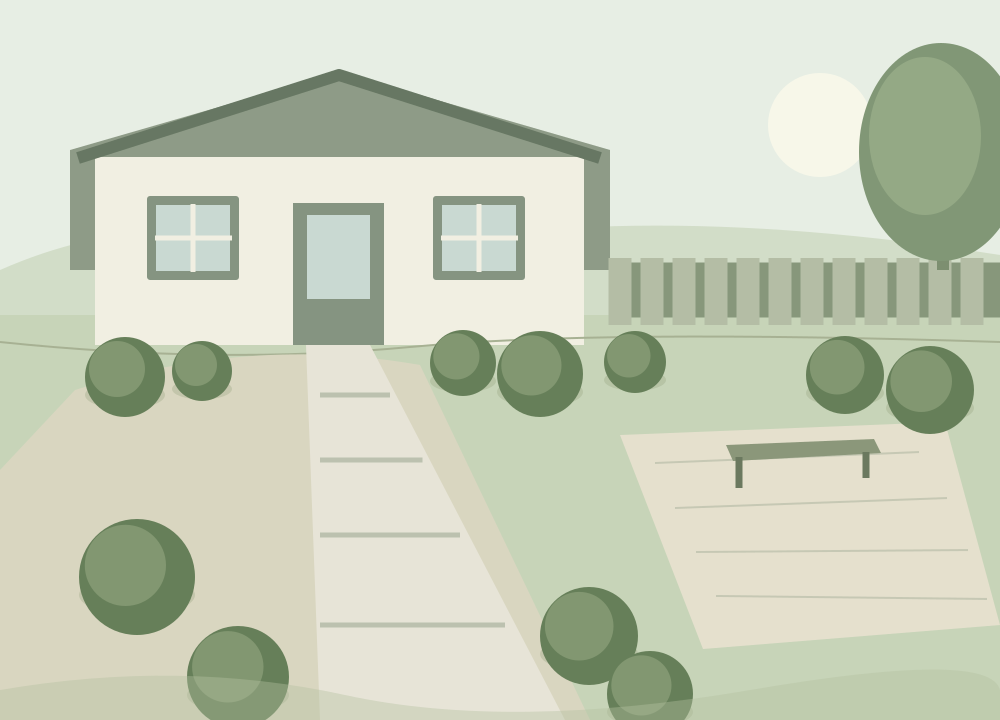
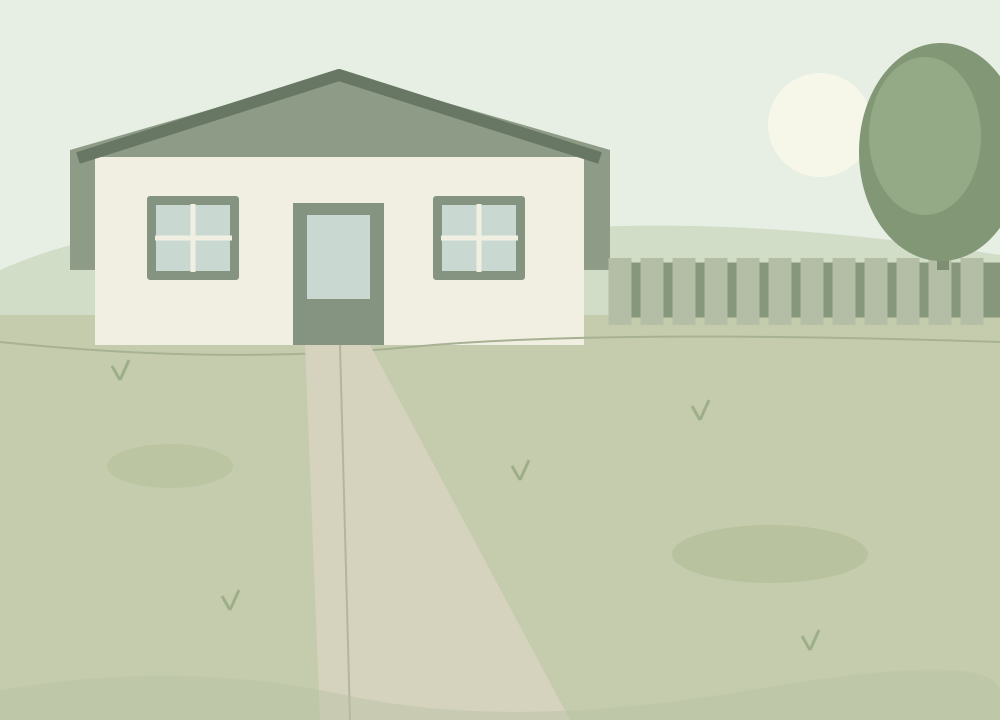
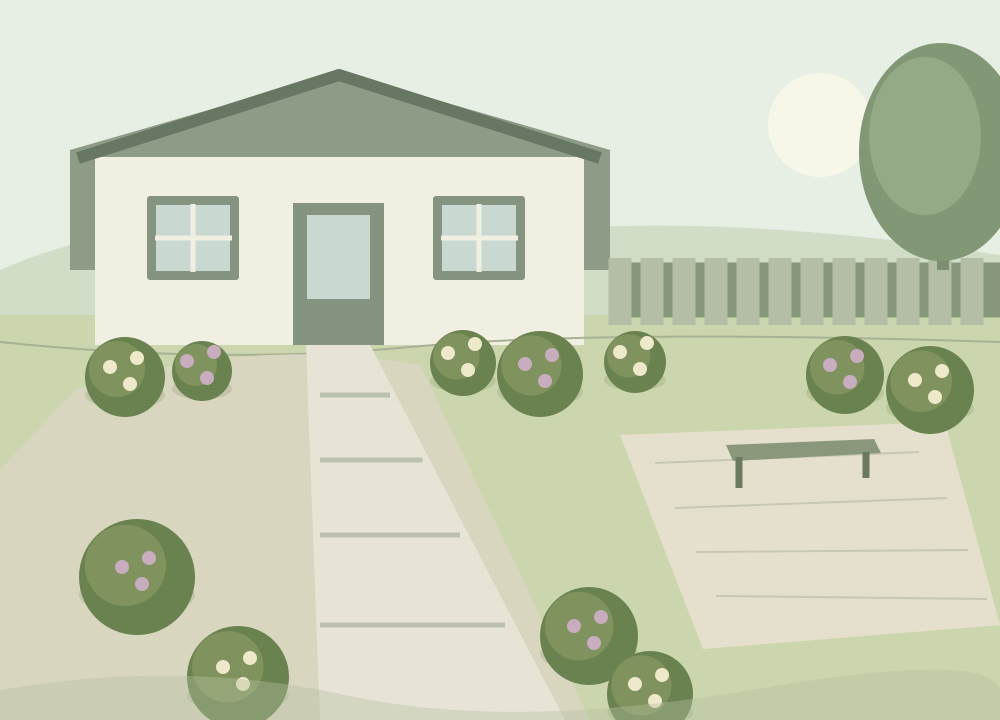
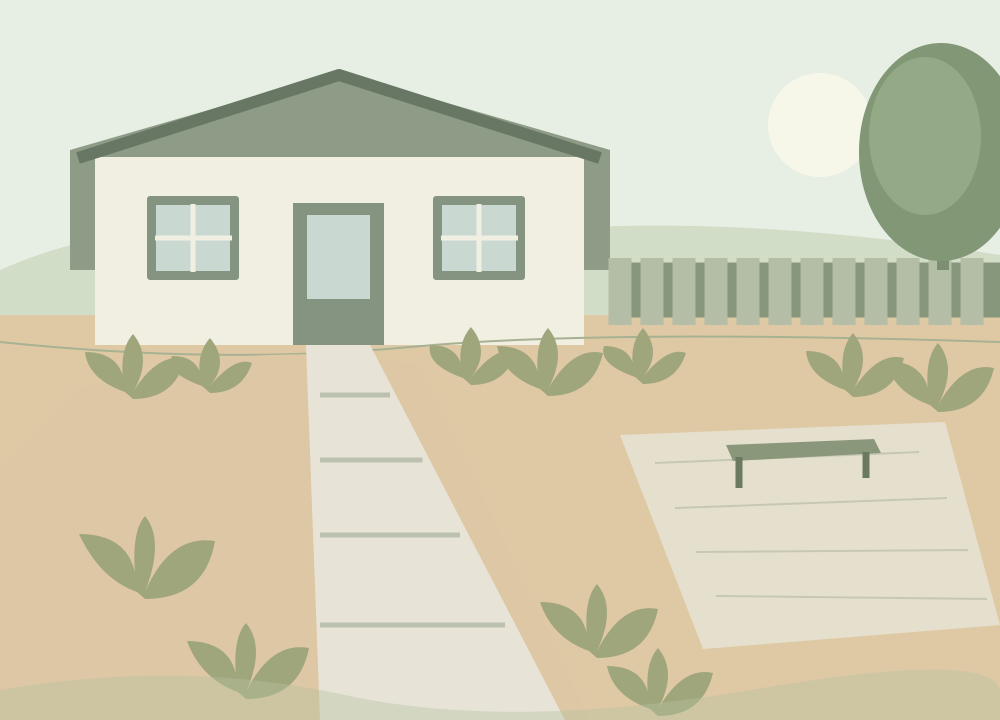
Create a place to spend time outside
Begin with the seat, table, or small courtyard you hope to use. Place it in relation to the house and the hours you expect to be outdoors. A sheltered breakfast spot has different needs from an evening gathering area. Test the furniture arrangement at full size and look at the view from a seated position before choosing the surrounding plants.
Consider how shade will be provided and how the space changes through the day. An existing canopy, a future tree, and a built structure each create different conditions and responsibilities. Keep the route between the house and seating straightforward. The relaxed feeling comes partly from easy use; a beautiful corner that requires an awkward journey with food or cushions may be visited less often.
Use a restrained material and color palette
Select a small family of materials that works with the house rather than importing every visual cue associated with the style. A muted wall, a consistent ground surface, and a few well-placed containers can be enough to establish a direction. View real material samples outside, where light and weather can make them look different from a screen.
Let color have a hierarchy. Choose a quiet background, then decide where a stronger accent belongs, perhaps near the seating or entrance. Repeating the same container character can be more coherent than displaying many unrelated finishes. Keep practical needs visible as well: furniture should sit securely, the surface should suit the way people move, and maintenance should remain manageable.
Separate the visual idea from the regional climate
Mediterranean climate and Mediterranean garden style are not interchangeable. University of Arizona Extension describes Mediterranean rainfall patterns as having a dry summer period, which differs from regions with substantial summer rain. A plant that succeeds under one pattern may need different care or may be unsuitable under another. Check local performance before assuming that a style name identifies a reliable plant palette.
USDA hardiness provides another filter, focused on winter cold. It does not resolve humidity, summer heat, or wet soil. If a familiar plant associated with the style is a poor fit, seek an alternative with a similar shape or texture that suits the site. You can preserve the composition without requiring every plant to come from the same geographic tradition.
Build planting around texture and space
Choose a few complementary roles: a tree or taller element where space allows, rounded or upright shrubs for structure, and lower planting to connect the bed to the sitting area. Use silvery, gray-green, or aromatic foliage only where the actual species is suitable. A leaf color is an aesthetic choice, not proof of drought tolerance, drainage tolerance, or local reliability.
Leave enough room to appreciate individual forms. A crowded bed can lose the contrast between a broad leaf, fine texture, and clear branching. Compare mature dimensions with the available space and plan how you will reach the plants for care. Near frequently used seats or paths, think about scent, fallen material, and the household's preferences rather than assuming every sensory effect is welcome.
Make containers and water needs manageable
Containers can bring a planting accent close to a doorway or seat, but they add a separate care task. Decide how they will be watered, whether they can drain appropriately, and what happens in winter. A heavy container that looks movable in a concept may not be practical to relocate once filled. Choose its position with the full routine in mind.
Group compatible plants and distinguish establishment care from the long-term watering plan. Keep a record of what performs well through both dry and wet periods before expanding the scheme. This page offers an illustrative direction, not a verified planting prescription for every region. The future photo tool is coming soon; for now, refine a brief that combines a comfortable outdoor room with locally dependable planting and materials.
Plant candidates for zone 9b
This illustrative shortlist assumes zone 9b. These are climate-filtered candidates, not a planting prescription. Check sunlight, drainage, mature size, and local invasive-species guidance. Style matches are editorial suggestions.
| Plant | Type | USDA zones | Light | Mature height |
|---|---|---|---|---|
| Feather Reed GrassCalamagrostis x acutiflora | Grass | 4–11.5 | full sun, partial shade | 3–5 ft1–2 ft wide |
| Japanese Forest GrassHakonechloa macra | Grass | 5–9.5 | partial shade, full shade | 1–1.5 ft1–2 ft wide |
| Little BluestemSchizachyrium scoparium | Grass | 3–9.5 | full sun | 2–4 ft1.5–3 ft wide |
| Cloud-loving Hardy Ice PlantDelosperma nubigenum | Groundcover | 6–9.5 | full sun, partial shade | 0.1667–0.25 ft0.75–3 ft wide |
| Creeping ThymeThymus serpyllum | Groundcover | 4–9.5 | full sun | 0.1667–0.25 ft0.25–0.8333 ft wide |
| Hardy Ice PlantDelosperma cooperi | Groundcover | 6–10.5 | full sun | 0.25–0.5 ft1–2 ft wide |
| Autumn SageSalvia greggii | Perennial | 6–9.5 | full sun, partial shade | 2–3 ft2–3 ft wide |
| Blue CatmintNepeta x faassenii | Perennial | 5–9.5 | full sun, partial shade | 1.5–2 ft2–3 ft wide |
| Mealycup SageSalvia farinacea | Perennial | 8–10.5 | full sun | 1.5–3 ft1–2 ft wide |
| English LavenderLavandula angustifolia | Shrub | 5–9.5 | full sun, partial shade | 1–2 ft2–3 ft wide |
| Fragrant Tea OliveOsmanthus fragrans | Shrub | 8–11.5 | full sun, partial shade | 10–20 ft10–14 ft wide |
| Indian HawthornRhaphiolepis indica | Shrub | 8–10.5 | full sun | 4–6 ft4–6 ft wide |
| Crape MyrtleLagerstroemia indica | Tree | 6–9.5 | full sun | 6–30 ft6–30 ft wide |
| Deodar CedarCedrus deodara | Tree | 7–9.5 | full sun, partial shade | 30–50 ft30–40 ft wide |
| Italian CypressCupressus sempervirens | Tree | 7–10.5 | full sun | 40–70 ft3–6 ft wide |
| Live OakQuercus virginiana | Tree | 8–10.5 | full sun, partial shade | 40–80 ft30–100 ft wide |
Zone numbers ending in .5 mean the b half-zone; whole numbers mean the a half-zone. A matching cold range does not guarantee local suitability. Missing facts are shown as not verified.
A rough material budget, made visible
Illustrative 400 sq ft yard: 200 sq ft of mulched beds, 80 sq ft of paving, and 120 sq ft retained. Plant quantities below are example assumptions. This is a worked example; get local quotes for your own project.
| Material | Quantity | Unit range | Subtotal |
|---|---|---|---|
| 1-gallon perennial | 12 plants | $8–$15 | $96–$180 |
| 3-gallon shrub | 4 plants | $25–$45 | $100–$180 |
| Mulch | 200 sq ft | $0.20–$0.60 | $40–$120 |
| Paving material | 80 sq ft | $1–$25 | $80–$2,000 |
| Illustrative total | $316–$2,480 | ||
Rough estimate, not a quote. Excludes labor, tax, delivery, demolition, soil preparation, permits, and irrigation. Supplied planning ranges have not been independently price-verified for your location. Plant-price reference · Material-price reference. Confirm current supplier quotes before purchasing.
Questions about mediterranean garden
Can I make a Mediterranean-inspired garden outside a Mediterranean climate?
Yes, by adapting the layout, materials, and planting character. Select locally suitable plants instead of assuming classic species will perform in different rainfall or humidity conditions.
Does Mediterranean style always mean low water use?
No. Water demand depends on the actual plants, climate, soil, containers, and management. The appearance alone does not establish water use.
Are terracotta containers required?
No. Use containers whose appearance, drainage, durability, and maintenance fit the project. A consistent choice matters more than following one material rule.
Why does drainage matter when choosing the plants?
A plant may tolerate dry conditions yet struggle in persistently wet soil. Verify the requirements of the exact species and the actual site before planting.
Is zone 9b enough information to choose the whole palette?
No. It supplies a winter-cold reference. Heat, rainfall pattern, light, soil, and local suitability still need to be checked.
Sources and further reading
- University of Arizona Cooperative Extension: Drought and Extreme Heat
- USDA: How to Use the Plant Hardiness Zone Map
- University of Arizona Cooperative Extension: Choosing the Right Plants
Original editorial guide. Examples are illustrative; check site-specific conditions with your local extension service.