Picture the possibilities
Sample placeholders show the comparison layout. Real project photos and generated results are still being prepared.
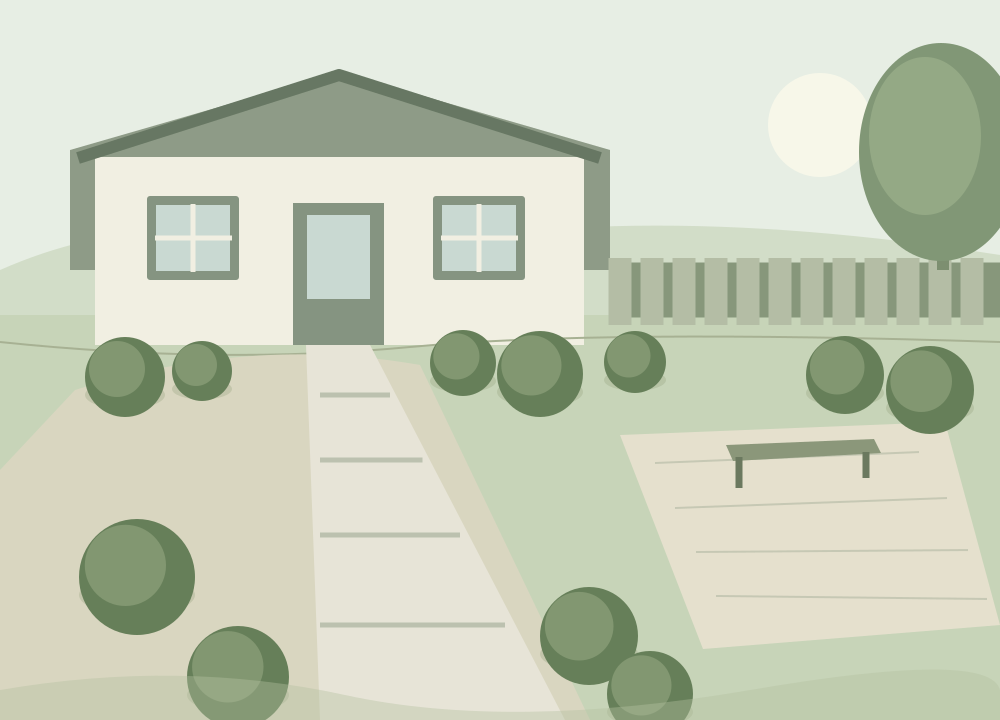
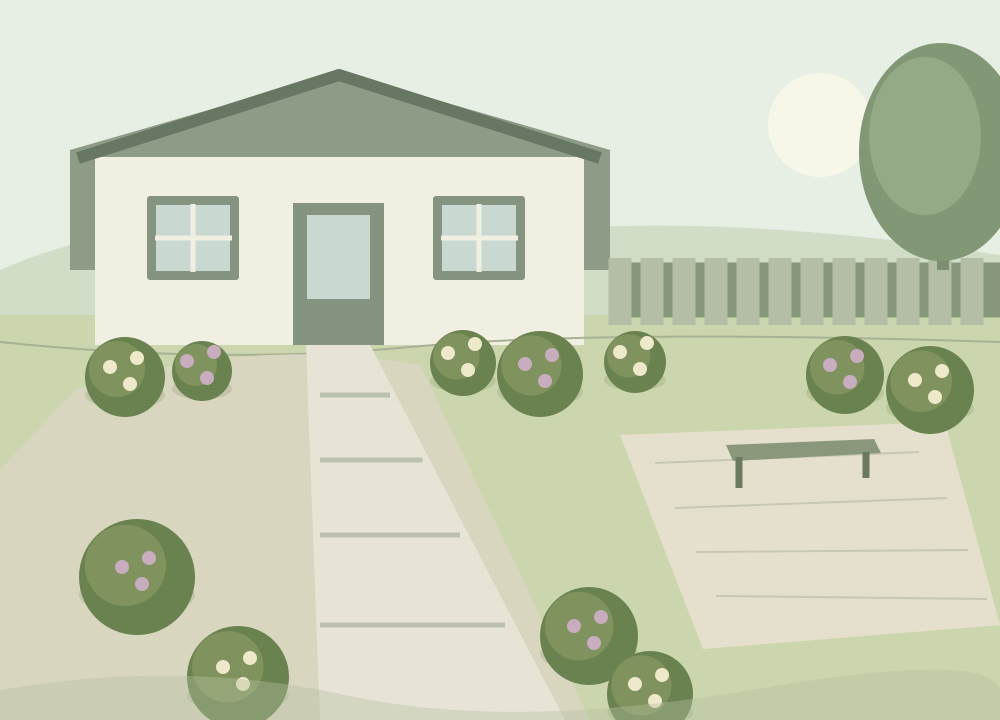
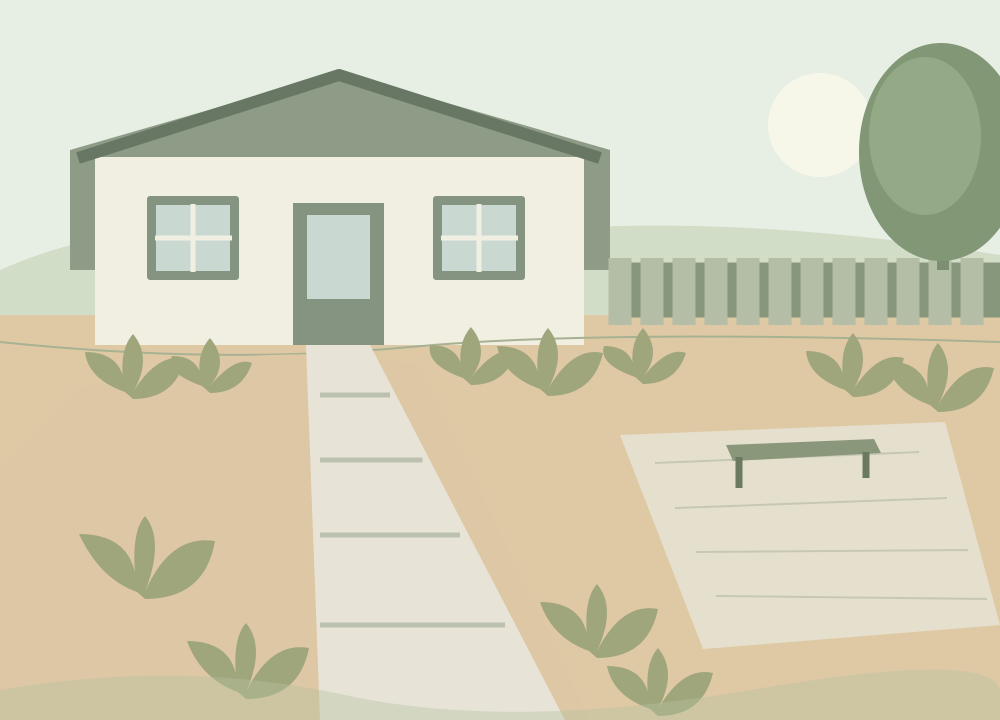
Map heat before selecting a visual style
Observe the yard during the parts of the day when you hope to use it. A seating area that looks inviting in a morning photograph may be uncomfortable later, while a wall can reflect additional heat onto nearby planting. Mark exposed pavement, shade patterns, and sheltered areas on a sketch. Design the human use of the space around that information before filling the remaining ground with decorative features.
University of Arizona Extension distinguishes ordinary sun exposure from reflected light and heat. Treat that distinction as a prompt to investigate each planting location. A plant sold for full sun in another region may not be appropriate beside a hot wall in your conditions. Ask a local nursery or extension adviser about the precise exposure rather than relying on the broad style label desert.
Create a useful relationship between shade and open space
Decide where shade would make the largest difference to daily use. It might be beside the back door, over a resting place, or along a frequently traveled route. Compare retaining an established tree, planting for future shade, and investigating a suitable structure. These options have different timelines and practical requirements, so avoid showing them as interchangeable solutions in a concept.
Keep open ground intentional. A clear area around a sculptural plant can make its form readable, but a large unbroken surface may feel harsh if it dominates every view. Balance the solid areas with planting groups and the actual places people need to move. Choose a focal point from the main viewpoint and allow less prominent areas to remain visually quieter.
Give water a place in the design
Prepare a watering plan alongside the planting plan. Group plants with compatible needs, make irrigation components accessible, and consider how newly planted specimens will be cared for while they establish. Drought adaptation does not mean that every plant can be abandoned after installation. Local weather, soil, plant age, and restrictions all affect the routine, so a universal calendar would be misleading.
Observe where rainfall already travels and where water collects. Any proposed grading or water-harvesting feature needs to suit the actual property and avoid creating trouble for buildings or neighboring land. Do not copy a dry creek shape from an image and assume it will function as drainage. Keep decorative surface patterns distinct from features intended to move or store water.
Choose plants by role and local suitability
Build the composition around a few roles: a source of shade where appropriate, a substantial middle layer, and smaller accents that repeat through the scene. Check mature dimensions so a plant with an impressive nursery form does not later obstruct a path or window. Where spines or sharp leaves are present, consider the people, pets, and maintenance activity that will pass nearby.
Confirm winter tolerance as well as heat tolerance. Desert regions do not share one USDA zone, and a warm-looking landscape image says nothing about the cold conditions at your address. Use the plant table as a starting list, then check botanical identity, drainage needs, regional performance, and invasive-species guidance. A locally appropriate alternative can preserve a plant's design role without copying an unsuitable species.
Make the material palette practical
Compare loose aggregate and hard surfaces for the way you intend to use them. Walking, moving furniture, rolling equipment, and clearing leaves can each favor a different finish. Look at a real sample in the yard before committing to a large area, because color and glare can feel different outside than on a screen. Keep edge details simple enough to maintain and repair.
Finish the brief by separating the appearance you like from the conditions still requiring verification. A desert concept may suggest a calm balance of shade, planting, and open ground, but it cannot prove irrigation performance or site suitability. The sample visuals here remain placeholders, and the generator is coming soon. Use this planning stage to make a site-aware shortlist and a coherent first phase rather than buying a collection of unrelated desert-themed objects.
Plant candidates for zone 9b
This illustrative shortlist assumes zone 9b. These are climate-filtered candidates, not a planting prescription. Check sunlight, drainage, mature size, and local invasive-species guidance. Style matches are editorial suggestions.
| Plant | Type | USDA zones | Light | Mature height |
|---|---|---|---|---|
| Feather Reed GrassCalamagrostis x acutiflora | Grass | 4–11.5 | full sun, partial shade | 3–5 ft1–2 ft wide |
| Japanese Forest GrassHakonechloa macra | Grass | 5–9.5 | partial shade, full shade | 1–1.5 ft1–2 ft wide |
| Little BluestemSchizachyrium scoparium | Grass | 3–9.5 | full sun | 2–4 ft1.5–3 ft wide |
| Cloud-loving Hardy Ice PlantDelosperma nubigenum | Groundcover | 6–9.5 | full sun, partial shade | 0.1667–0.25 ft0.75–3 ft wide |
| Creeping StonecropPhedimus spurius | Groundcover | 3–9.5 | partial shade | 0.1667–0.5 ft2–3 ft wide |
| Hardy Ice PlantDelosperma cooperi | Groundcover | 6–10.5 | full sun | 0.25–0.5 ft1–2 ft wide |
| Adam's Needle YuccaYucca filamentosa | Perennial | 4–10.5 | full sun, partial shade | 3–8 ft3–5 ft wide |
| Autumn SageSalvia greggii | Perennial | 6–9.5 | full sun, partial shade | 2–3 ft2–3 ft wide |
| Century PlantAgave americana | Perennial | 8–11.5 | full sun | 6–10 ft6–10 ft wide |
| American BeautyberryCallicarpa americana | Shrub | 6–10.5 | full sun, partial shade | 3–8 ft3–6 ft wide |
| Bigleaf HydrangeaHydrangea macrophylla | Shrub | 6–11.5 | partial shade, full shade | 3–6 ft3–6 ft wide |
| Texas SageLeucophyllum frutescens | Shrub | 8–11.5 | full sun, partial shade | 6–12 ft6–12 ft wide |
| American HollyIlex opaca | Tree | 5–9.5 | full sun, partial shade | 40–60 ft10–20 ft wide |
| Chinese JuniperJuniperus chinensis | Tree | 4–9.5 | full sun | 50–60 ft10–20 ft wide |
| Crape MyrtleLagerstroemia indica | Tree | 6–9.5 | full sun | 6–30 ft6–30 ft wide |
| Deodar CedarCedrus deodara | Tree | 7–9.5 | full sun, partial shade | 30–50 ft30–40 ft wide |
Zone numbers ending in .5 mean the b half-zone; whole numbers mean the a half-zone. A matching cold range does not guarantee local suitability. Missing facts are shown as not verified.
A rough material budget, made visible
Illustrative 400 sq ft yard: 200 sq ft of mulched beds, 80 sq ft of paving, and 120 sq ft retained. Plant quantities below are example assumptions. This is a worked example; get local quotes for your own project.
| Material | Quantity | Unit range | Subtotal |
|---|---|---|---|
| 1-gallon perennial | 12 plants | $8–$15 | $96–$180 |
| 3-gallon shrub | 4 plants | $25–$45 | $100–$180 |
| Mulch | 200 sq ft | $0.20–$0.60 | $40–$120 |
| Paving material | 80 sq ft | $1–$25 | $80–$2,000 |
| Illustrative total | $316–$2,480 | ||
Rough estimate, not a quote. Excludes labor, tax, delivery, demolition, soil preparation, permits, and irrigation. Supplied planning ranges have not been independently price-verified for your location. Plant-price reference · Material-price reference. Confirm current supplier quotes before purchasing.
Questions about desert landscaping
Does desert landscaping mean covering the whole yard with gravel?
No. A desert landscape can combine useful shade, locally suitable plants, paths, and open ground. Gravel is one material choice, not a complete design or water plan.
Are all desert plants suitable for full afternoon sun?
No. Reflected heat, plant species, local climate, and establishment stage matter. Check the exact exposure with regional guidance.
Can I stop watering once I choose drought-tolerant plants?
Do not assume that. New plants commonly need establishment care, and established plants may still need appropriate water during prolonged dry conditions.
Is zone 9b the standard zone for desert gardens?
No. Desert locations span different winter conditions. Look up the actual address and verify each plant rather than treating a style as a climate designation.
Can a decorative dry creek solve a drainage problem?
Its appearance alone cannot establish that. Drainage requires an assessment of grade, soil, flow, outlets, and the effect on buildings and neighboring property.
Sources and further reading
- University of Arizona Cooperative Extension: Choosing the Right Plants
- University of Arizona Cooperative Extension: Drought and Extreme Heat
- USDA: How to Use the Plant Hardiness Zone Map
Original editorial guide. Examples are illustrative; check site-specific conditions with your local extension service.