Picture the possibilities
Sample placeholders show the comparison layout. Real project photos and generated results are still being prepared.
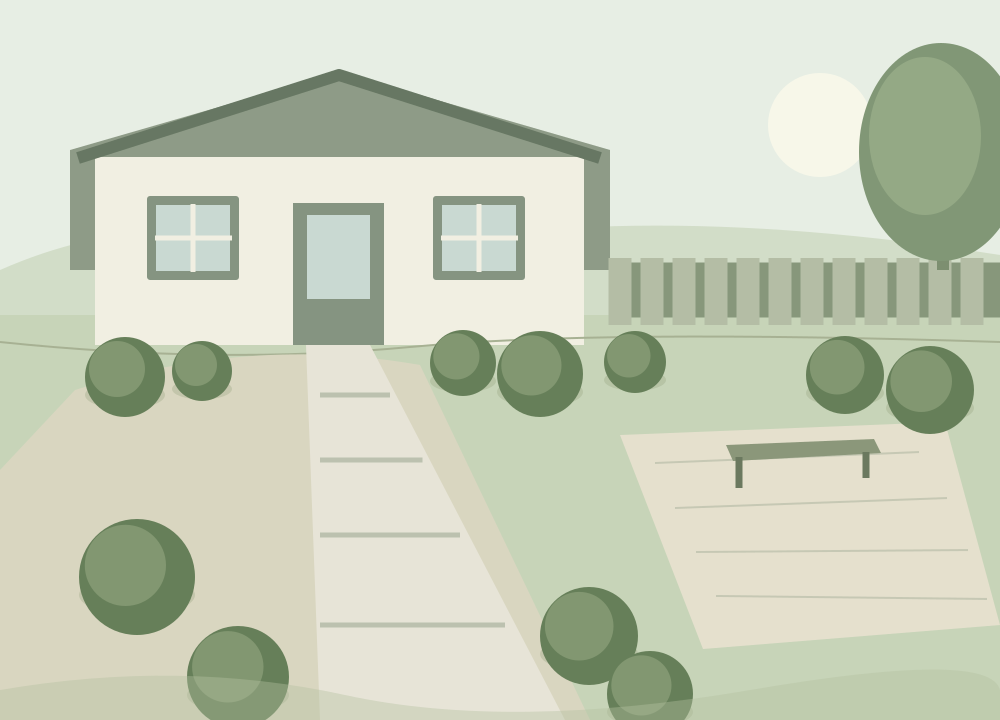
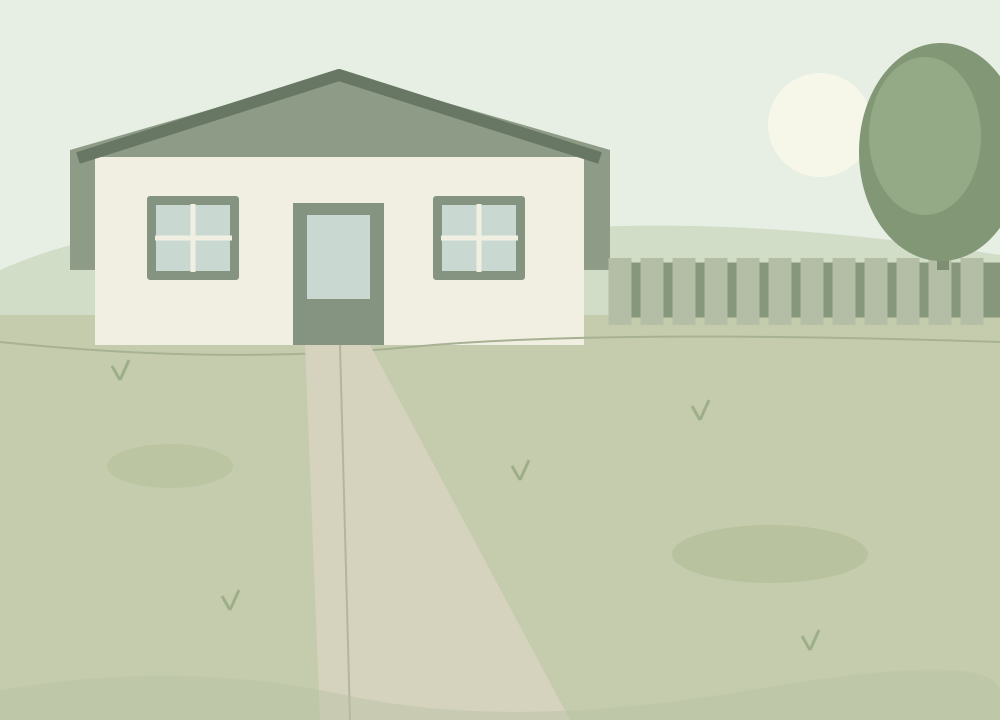
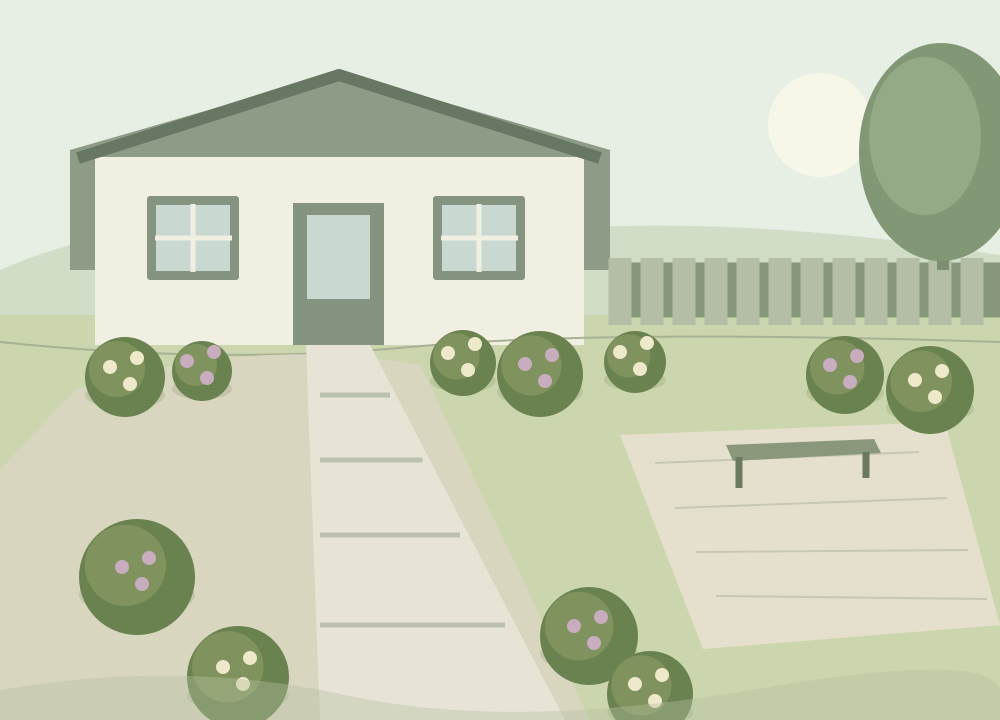
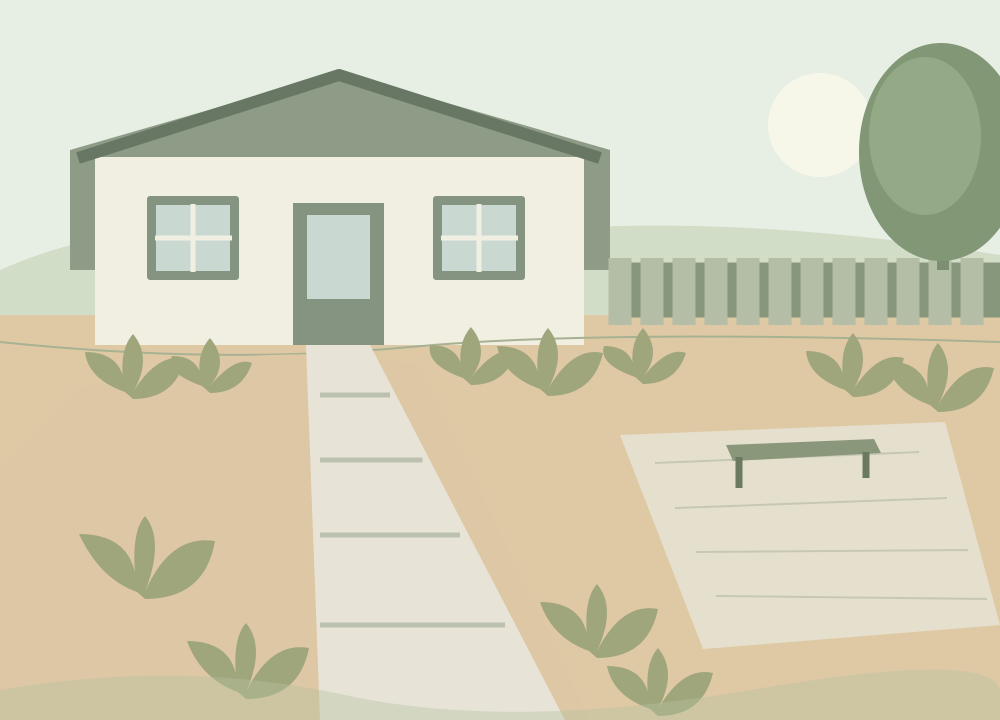
Design the garden in its quiet season first
Imagine the property after the main flowering display has ended. Identify the views you still experience from the house and the paths you continue to use. A garden can remain coherent through the outline of beds, suitable woody plants, and deliberate open space. Starting with this quieter picture helps you avoid making every important design decision around a brief moment of summer abundance.
Choose structural plants for the space they will occupy over time. A tree or substantial shrub can influence both winter views and summer shade, so its placement deserves more attention than a temporary accent. Check mature dimensions and the exact plant identity before deciding. The finished garden should have room for growth without making the route to the house or service areas progressively narrower.
Use the 6b filter without losing site detail
The USDA band offers a shared reference for winter cold. It does not describe how much summer sun a bed receives, how quickly the soil drains, or how wind moves through the property. Keep those observations on the same page as the map result. A suitable candidate for a protected courtyard may still be poorly matched to a wet or exposed area elsewhere in the yard.
Pay particular attention to the role of a plant chosen near the edge of its listed range. If its loss would leave a large gap in the design, seek strong local evidence before making it essential. There is room for experimentation, but make the experiment explicit. A small optional accent can be a more manageable place to learn than the only proposed privacy screen.
Combine perennials for succession and access
Build perennial groups around compatible growing requirements, then compare their seasonal contributions. Some plants are chosen for flowers, others for foliage or the way their form connects adjacent groups. Repeat a useful plant where conditions allow instead of filling every space with a different specimen. This can make a border easier to understand and easier to maintain as individual plants change.
Leave a route for care and enough room for mature spread. Consider how you will reach plants that need division, cutting back, or support. A border that looks full in a concept can become difficult to manage if its center is inaccessible. Keep the first planting phase small enough to observe closely, then expand after you understand how the selected plants perform on your site.
Give containers their own winter plan
An above-ground container is a different environment from garden soil. Iowa State University Extension explains why unplanted woody plants and perennials need protection when overwintered in containers. Use appropriate local guidance for the plants you intend to keep in pots rather than assuming that the in-ground zone rating covers every container arrangement.
Before making a container the main feature of an entry or patio, consider its filled weight, drainage, winter location, and watering access. If the plan requires moving it, verify that the move is practical. If it will remain outside, choose the plant and container with that routine in mind. A smaller seasonal display may fit your needs better than an arrangement that depends on difficult winter handling.
Plan establishment around the actual conditions
Ask a local nursery or extension source about planting timing and initial care for the exact species and stock you are purchasing. The zone number alone does not provide a planting calendar. Soil condition, weather, and plant type affect the appropriate sequence. Have the site and watering access ready before bringing home more plants than you can manage promptly.
Use the example table to organize candidates, then check botanical names, mature size, light, moisture, and regional invasive-species information. Record what you plant and where, including any changes from the initial plan. When the next quiet season arrives, compare the real view with the structure you intended. That observation can guide the following phase more effectively than adding another set of plants without reviewing the first.
Plant candidates for zone 6b
This page uses zone 6b. These are climate-filtered candidates, not a planting prescription. Check sunlight, drainage, mature size, and local invasive-species guidance. Style matches are editorial suggestions.
| Plant | Type | USDA zones | Light | Mature height |
|---|---|---|---|---|
| Blue FescueFestuca glauca | Grass | 4–8.5 | full sun, partial shade | 0.75–1 ft1–1.5 ft wide |
| Feather Reed GrassCalamagrostis x acutiflora | Grass | 4–11.5 | full sun, partial shade | 3–5 ft1–2 ft wide |
| Japanese Forest GrassHakonechloa macra | Grass | 5–9.5 | partial shade, full shade | 1–1.5 ft1–2 ft wide |
| BearberryArctostaphylos uva-ursi | Groundcover | 3–7.5 | full sun, partial shade | 0.5–1 ft3–6 ft wide |
| Canadian Wild GingerAsarum canadense | Groundcover | 4–6.5 | partial shade, full shade | 0.5–1 ft0.3333–0.5 ft wide |
| Cloud-loving Hardy Ice PlantDelosperma nubigenum | Groundcover | 6–9.5 | full sun, partial shade | 0.1667–0.25 ft0.75–3 ft wide |
| Adam's Needle YuccaYucca filamentosa | Perennial | 4–10.5 | full sun, partial shade | 3–8 ft3–5 ft wide |
| American AlumrootHeuchera americana | Perennial | 4–9.5 | full sun, partial shade | 1–3 ft1–1.5 ft wide |
| Anise HyssopAgastache foeniculum | Perennial | 4–8.5 | full sun, partial shade | 3–5 ft1.5–3 ft wide |
| American BeautyberryCallicarpa americana | Shrub | 6–10.5 | full sun, partial shade | 3–8 ft3–6 ft wide |
| Arrowwood ViburnumViburnum dentatum | Shrub | 2–8.5 | full sun, partial shade | 5–10 ft6–10 ft wide |
| Bigleaf HydrangeaHydrangea macrophylla | Shrub | 6–11.5 | partial shade, full shade | 3–6 ft3–6 ft wide |
| American ArborvitaeThuja occidentalis | Tree | 3–7.5 | full sun, partial shade | 40–60 ft10–15 ft wide |
| American HollyIlex opaca | Tree | 5–9.5 | full sun, partial shade | 40–60 ft10–20 ft wide |
| Blue SprucePicea pungens | Tree | 2–7 | full sun, partial shade | 30–60 ft10–20 ft wide |
| Chinese JuniperJuniperus chinensis | Tree | 4–9.5 | full sun | 50–60 ft10–20 ft wide |
Zone numbers ending in .5 mean the b half-zone; whole numbers mean the a half-zone. A matching cold range does not guarantee local suitability. Missing facts are shown as not verified.
A rough material budget, made visible
Illustrative 400 sq ft yard: 200 sq ft of mulched beds, 80 sq ft of paving, and 120 sq ft retained. Plant quantities below are example assumptions. This is a worked example; get local quotes for your own project.
| Material | Quantity | Unit range | Subtotal |
|---|---|---|---|
| 1-gallon perennial | 12 plants | $8–$15 | $96–$180 |
| 3-gallon shrub | 4 plants | $25–$45 | $100–$180 |
| Mulch | 200 sq ft | $0.20–$0.60 | $40–$120 |
| Paving material | 80 sq ft | $1–$25 | $80–$2,000 |
| Illustrative total | $316–$2,480 | ||
Rough estimate, not a quote. Excludes labor, tax, delivery, demolition, soil preparation, permits, and irrigation. Supplied planning ranges have not been independently price-verified for your location. Plant-price reference · Material-price reference. Confirm current supplier quotes before purchasing.
Questions about zone 6b plants
What winter temperatures define zone 6b?
The USDA map assigns 6b to average annual extreme minimum winter temperatures of minus 5 to 0 degrees Fahrenheit.
Are all perennials for zone 6 appropriate for my yard?
They may pass an initial cold check, but the exact plant still needs compatible light, soil, moisture, and space. Verify the cultivar and local performance.
Can a hardy perennial remain in an exposed pot through winter?
Container roots experience different conditions from roots in the ground. Follow suitable local overwintering guidance for the plant and container.
How can a zone 6b garden look considered outside summer?
Plan the framework first: bed outlines, useful paths, woody structure, and locally suitable evergreen elements where appropriate. Then add seasonal flowering layers.
Does zone 6b tell me the correct planting date?
No. Use local seasonal guidance and actual soil and weather conditions for the type of plant you intend to install.
Sources and further reading
- USDA: National Map and Temperature Legend
- Iowa State University Extension: Overwintering Unplanted Trees, Shrubs and Perennials
- University of Minnesota Extension: Protecting Trees and Shrubs in Winter
Original editorial guide. Examples are illustrative; check site-specific conditions with your local extension service.