Picture the possibilities
Sample placeholders show the comparison layout. Real project photos and generated results are still being prepared.
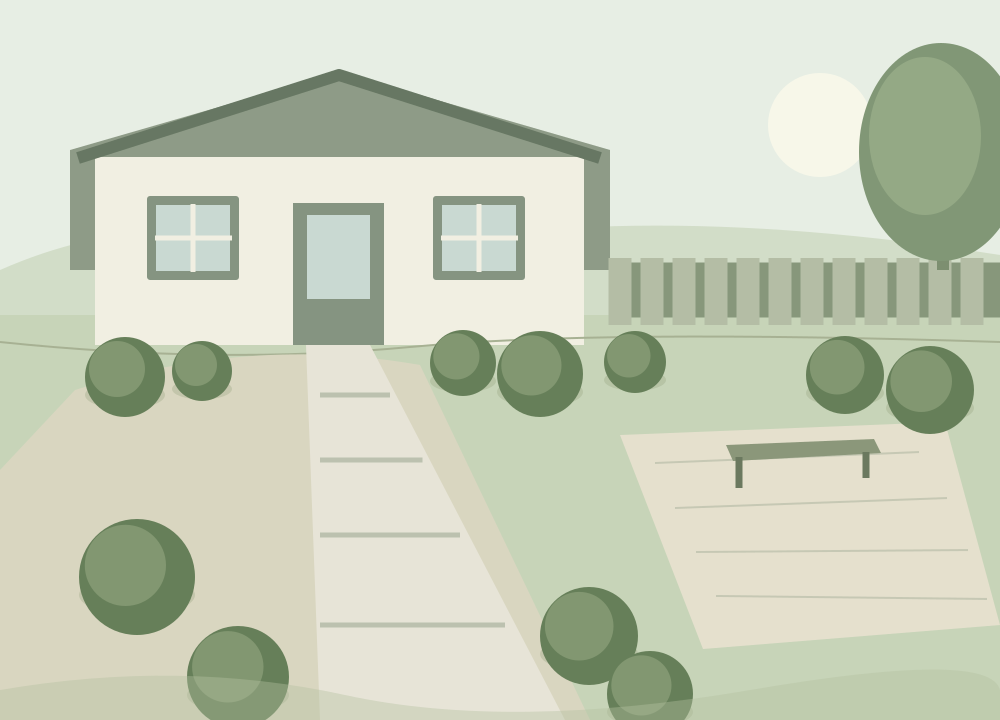
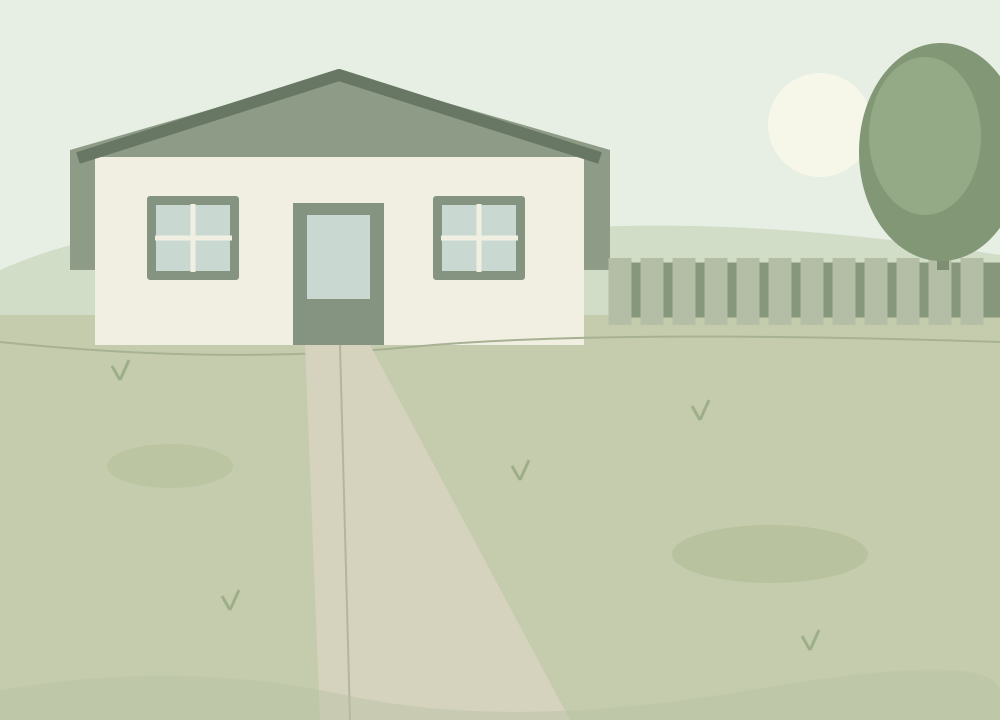
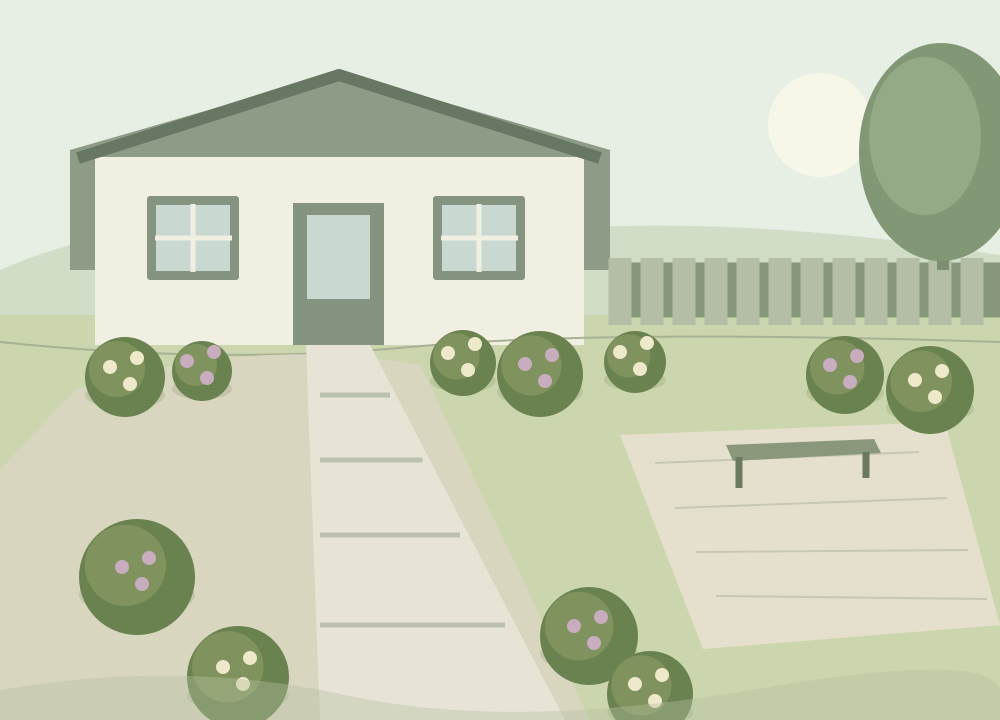
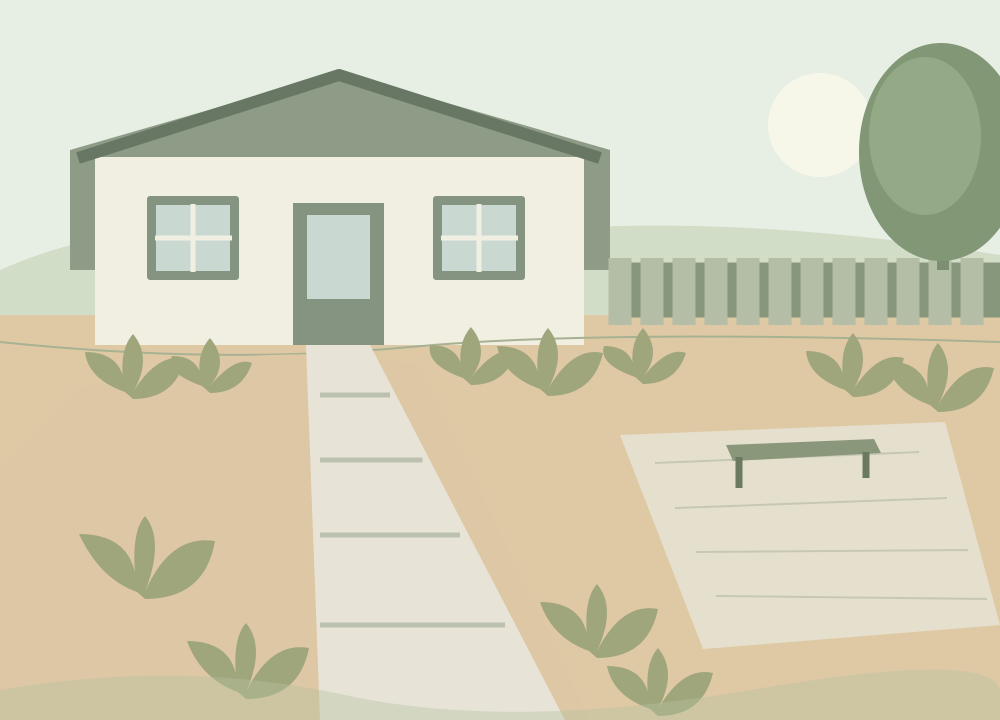
Describe the growing season as well as the winter
Write a short account of what makes gardening difficult at your address. It might be a long dry period, heavy seasonal rain, hot reflected exposure, or a shaded bed with persistent moisture. These conditions are more specific than the phrase zone 8b. The map supplies the cold reference, while your account helps explain what a candidate will encounter during the rest of the year.
Gather observations from more than one part of the property. A front border beside paving and a sheltered backyard under trees may need different plant groups. Do not use the success of one plant in one position as proof that it belongs everywhere. Keep each proposed location connected to its own light, water, and space notes as the design develops.
Choose permanent structure with mature growth in mind
Decide where the garden needs enclosure, shade, or a stable backdrop. Those roles often involve plants that will remain for years, so compare their eventual dimensions with the real site before considering smaller decorative layers. An evergreen screen may be attractive in a concept, but the mature width can affect access, adjacent planting, and the way the space feels from inside.
Ask whether every structural role needs to be evergreen. A deciduous plant may offer a useful seasonal change or allow a different winter view. The choice should follow the purpose of the space and local plant performance. Avoid adding a permanent screen simply because an image shows a lush boundary; first establish when privacy is needed and what the boundary is allowed to become.
Compose a perennial layer that fits the framework
Once the larger forms are placed, select lower planting for the light and root conditions those forms create. A bed beneath a future canopy will change as the tree grows. Plan for that transition rather than filling it with plants that require the open conditions of the first year. You can develop the underplanting in stages as the actual shade pattern becomes clearer.
Use flowers as part of a sequence. Compare foliage, habit, and seasonal gaps as well as bloom color. Repeated compatible groups can make the garden readable across the growing season, while isolated favorites may leave a patchwork of unrelated needs. The sample list offers possibilities; choose the subset that can work together in the conditions you have recorded.
Keep watering and soil decisions connected
Observe whether irrigation reaches every intended planting area and whether the soil can accommodate the proposed plants. A landscape that includes both moisture-loving accents and drier planting needs a manageable care arrangement. Group similar needs where possible and avoid putting a single demanding plant far from practical watering access merely because it balances the picture.
Treat persistent wetness, compaction, or unusual drainage as questions to resolve before planting. A top layer of mulch or gravel changes the visible surface but does not establish that the root environment is suitable. Discuss the actual soil with a local adviser when needed. Matching the plant to the position is often a more useful starting point than trying to force every area to support the same palette.
Check the shortlist and establish one coherent area
The table on this page selects candidates whose recorded cold ranges include 8b. It does not identify local natives, test invasive potential, or evaluate your individual soil. Verify those matters with regional resources and confirm botanical names and cultivars before purchasing. Keep the design roles visible during that check so an unsuitable candidate can be replaced by something that performs the same job.
Begin with a connected section whose preparation and care you can complete. Photograph the initial layout, record plant identities, and note how the area changes through the difficult season you identified at the start. Use that evidence to refine the next phase. The official USDA map can confirm the zone reference, while local extension guidance can help turn this example shortlist into a planting choice suited to your property.
Plant candidates for zone 8b
This page uses zone 8b. These are climate-filtered candidates, not a planting prescription. Check sunlight, drainage, mature size, and local invasive-species guidance. Style matches are editorial suggestions.
| Plant | Type | USDA zones | Light | Mature height |
|---|---|---|---|---|
| Blue FescueFestuca glauca | Grass | 4–8.5 | full sun, partial shade | 0.75–1 ft1–1.5 ft wide |
| Feather Reed GrassCalamagrostis x acutiflora | Grass | 4–11.5 | full sun, partial shade | 3–5 ft1–2 ft wide |
| Japanese Forest GrassHakonechloa macra | Grass | 5–9.5 | partial shade, full shade | 1–1.5 ft1–2 ft wide |
| Cloud-loving Hardy Ice PlantDelosperma nubigenum | Groundcover | 6–9.5 | full sun, partial shade | 0.1667–0.25 ft0.75–3 ft wide |
| Creeping PhloxPhlox subulata | Groundcover | 3–9.5 | full sun | 0.3333–0.5 ft2–3 ft wide |
| Creeping PhloxPhlox stolonifera | Groundcover | 4–8.5 | full sun, partial shade, full shade | 0.5–1 ft0.75–1.5 ft wide |
| Adam's Needle YuccaYucca filamentosa | Perennial | 4–10.5 | full sun, partial shade | 3–8 ft3–5 ft wide |
| American AlumrootHeuchera americana | Perennial | 4–9.5 | full sun, partial shade | 1–3 ft1–1.5 ft wide |
| Anise HyssopAgastache foeniculum | Perennial | 4–8.5 | full sun, partial shade | 3–5 ft1.5–3 ft wide |
| American BeautyberryCallicarpa americana | Shrub | 6–10.5 | full sun, partial shade | 3–8 ft3–6 ft wide |
| Arrowwood ViburnumViburnum dentatum | Shrub | 2–8.5 | full sun, partial shade | 5–10 ft6–10 ft wide |
| Bigleaf HydrangeaHydrangea macrophylla | Shrub | 6–11.5 | partial shade, full shade | 3–6 ft3–6 ft wide |
| American HollyIlex opaca | Tree | 5–9.5 | full sun, partial shade | 40–60 ft10–20 ft wide |
| Chinese JuniperJuniperus chinensis | Tree | 4–9.5 | full sun | 50–60 ft10–20 ft wide |
| Crape MyrtleLagerstroemia indica | Tree | 6–9.5 | full sun | 6–30 ft6–30 ft wide |
| Deodar CedarCedrus deodara | Tree | 7–9.5 | full sun, partial shade | 30–50 ft30–40 ft wide |
Zone numbers ending in .5 mean the b half-zone; whole numbers mean the a half-zone. A matching cold range does not guarantee local suitability. Missing facts are shown as not verified.
A rough material budget, made visible
Illustrative 400 sq ft yard: 200 sq ft of mulched beds, 80 sq ft of paving, and 120 sq ft retained. Plant quantities below are example assumptions. This is a worked example; get local quotes for your own project.
| Material | Quantity | Unit range | Subtotal |
|---|---|---|---|
| 1-gallon perennial | 12 plants | $8–$15 | $96–$180 |
| 3-gallon shrub | 4 plants | $25–$45 | $100–$180 |
| Mulch | 200 sq ft | $0.20–$0.60 | $40–$120 |
| Paving material | 80 sq ft | $1–$25 | $80–$2,000 |
| Illustrative total | $316–$2,480 | ||
Rough estimate, not a quote. Excludes labor, tax, delivery, demolition, soil preparation, permits, and irrigation. Supplied planning ranges have not been independently price-verified for your location. Plant-price reference · Material-price reference. Confirm current supplier quotes before purchasing.
Questions about zone 8b plants
What does USDA zone 8b mean?
It refers to an average annual extreme minimum winter temperature band of 15 to 20 degrees Fahrenheit. It is a cold-hardiness reference.
Does zone 8b identify one kind of summer climate?
No. Rainfall, humidity, heat, and exposure vary. Describe those conditions separately when choosing plants.
Can plants labeled for zone 8 work in zone 8b?
They may be candidates, but verify the full range and the exact plant or cultivar. Also check the site requirements and local performance.
Why should I plan for a tree before choosing the plants beneath it?
The future canopy can change light and available space. Choose or phase the lower planting with the mature framework in mind.
Does the example table identify native or noninvasive plants for my region?
No. It applies a cold-hardiness filter. Use regional resources to check native status, invasive-species guidance, and suitability for the actual location.
Sources and further reading
- USDA: National Map and Temperature Legend
- USDA: How to Use the Maps
- University of Arizona Cooperative Extension: Choosing the Right Plants
Original editorial guide. Examples are illustrative; check site-specific conditions with your local extension service.