Picture the possibilities
Sample placeholders show the comparison layout. Real project photos and generated results are still being prepared.
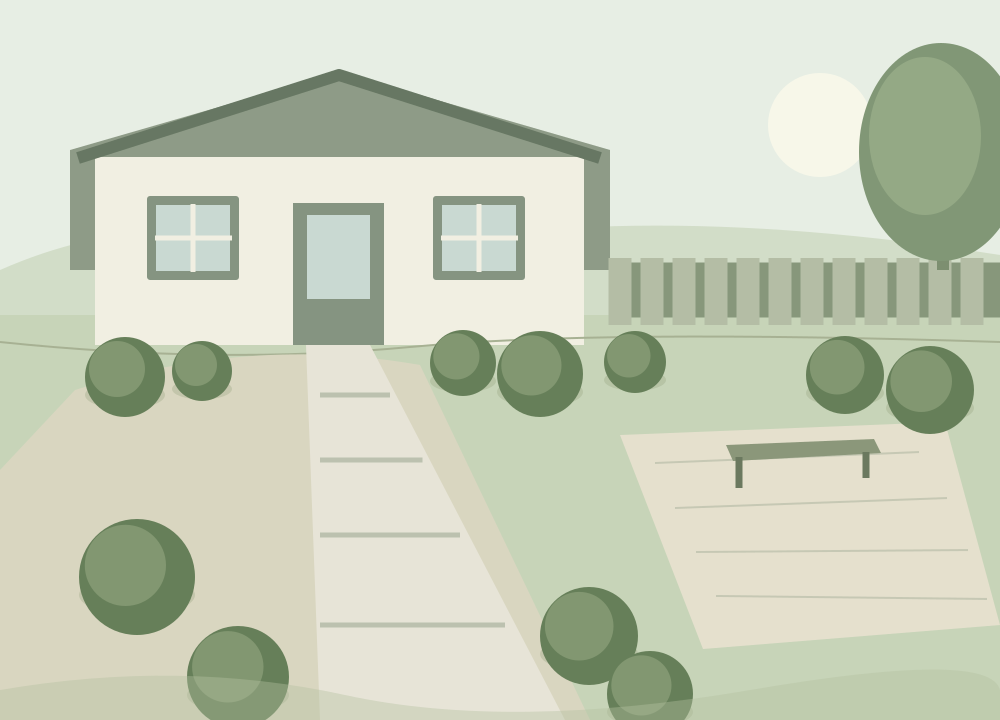
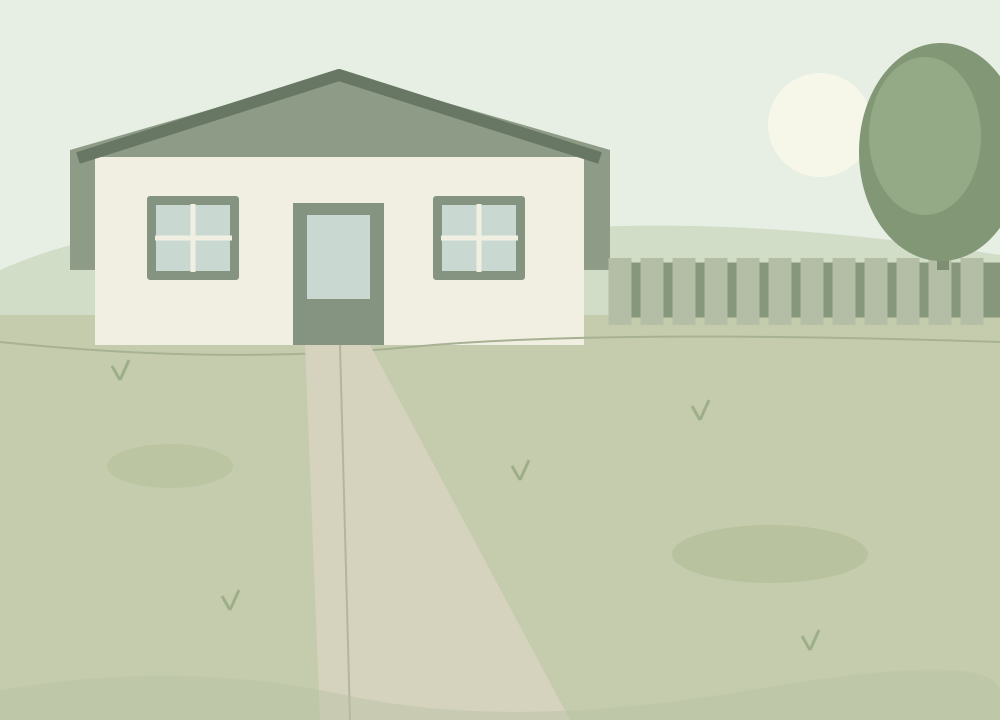
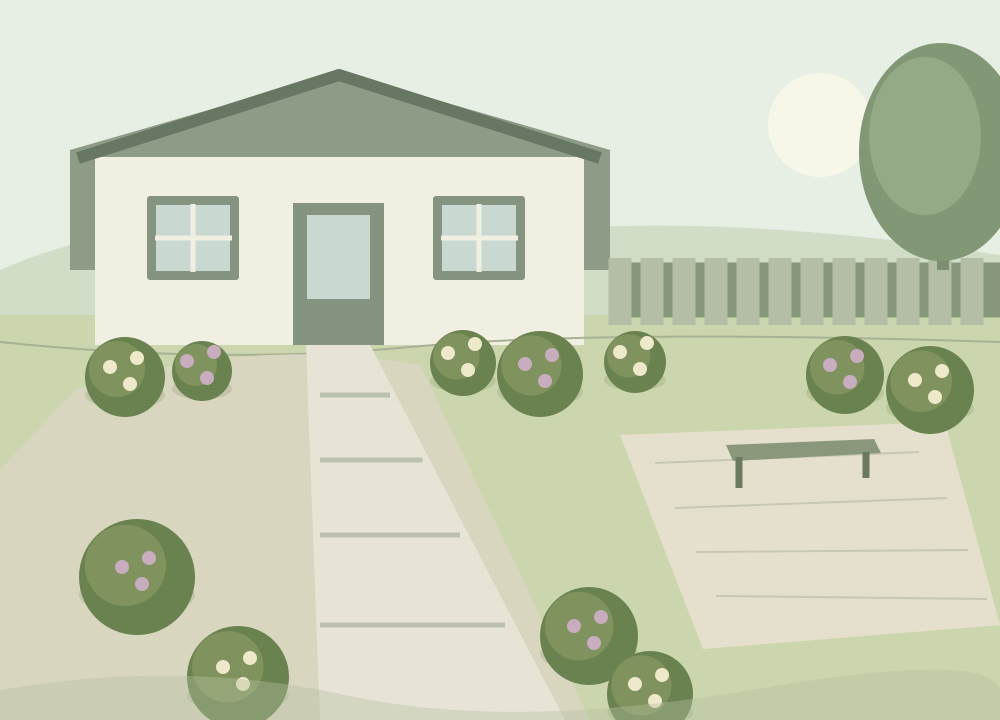
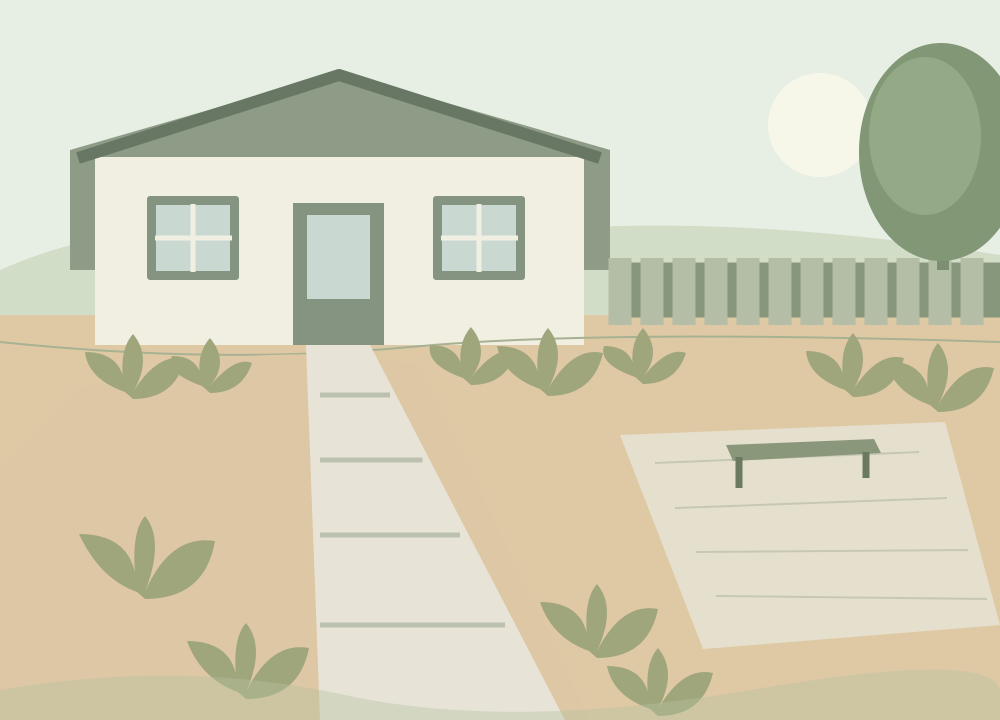
Start with a water-use map of the yard
Draw the existing beds, lawn, trees, paths, and irrigation equipment. Mark places that are difficult to water evenly, areas receiving overspray, and locations where water collects or runs off. Note which parts of the front yard people actually use. This record helps distinguish a water-management problem from a purely visual preference, so the redesign can address the cause rather than just change the surface.
Denver Water describes xeriscaping as a coordinated set of planning and maintenance principles. Use that framework to evaluate the whole arrangement. Replacing one thirsty plant with a different species may not resolve a poorly grouped bed or a malfunctioning watering system. Set a practical objective, such as making the irrigation groups easier to manage, without promising a particular savings percentage before measurement.
Decide where lawn earns its place
Look at each lawn section separately. A connected area used for play or sitting serves a different purpose from a thin strip between a driveway and a wall. The narrow strip may be hard to irrigate and maintain, while the useful area deserves a more careful comparison of options. Do not assume the design must remove every patch of grass to qualify as water-wise.
Sketch alternatives that keep circulation and the front entrance clear. A converted area should have an understandable bed shape and a maintenance plan, not merely a different ground covering. If existing trees depend on water from the lawn system, investigate how their needs will be met before changing that system. A conversion should consider the established landscape as well as the new planting.
Create compatible planting and irrigation groups
Group plants according to their actual needs and the conditions at each location. A high-care accent near the entrance may be manageable if its watering is separate from a drier border. Scattering plants with very different requirements through one irrigation zone can make it difficult to care for any of them appropriately. Keep the logic simple enough that another household member can understand it.
Select the watering method and layout with the plant arrangement, then keep components accessible for inspection. Confirm any proposed changes against local requirements and guidance. A plant list labeled drought tolerant does not specify emitter placement, soil wetting, or a schedule. Those decisions require site information, and they need adjustment as plants grow and the weather changes.
Match soil, surface treatment, and plants
Investigate drainage and soil conditions before adding a decorative mulch or aggregate layer. Surface appearance cannot reveal every issue below it. Some plants tolerate reduced irrigation but perform poorly where roots remain wet or lack air. Colorado State University Extension identifies drainage and exposure as important considerations when choosing xeric trees and shrubs. Use local advice when the site does not match a plant's requirements.
Choose the finish with maintenance and use in mind. Fallen leaves are easier to manage on some surfaces than others, and loose material can migrate onto paths. Test a small sample for color and practical feel before ordering the whole area. Leave appropriate access around equipment and avoid using a decorative surface as a substitute for resolving an underlying runoff or grading concern.
Plan establishment and measure what changes
Newly planted landscapes need attention. Prepare a plant-specific establishment routine and decide how you will observe soil moisture and plant condition. Keep records of replacements, irrigation adjustments, and areas that still struggle. A low-water intention should not become a reason to ignore young plants or an established tree whose previous water source has changed during the project.
After the yard has settled, compare like-for-like observations rather than judging only by appearance. Weather, household routines, and plant growth can influence water use. The sample here does not claim measured savings, and the planned design tool is still coming soon. Use the guide to develop a coherent front-yard brief, then verify plant suitability and system performance locally before treating the project as complete.
Plant candidates for zone 7b
This illustrative shortlist assumes zone 7b. These are climate-filtered candidates, not a planting prescription. Check sunlight, drainage, mature size, and local invasive-species guidance. Style matches are editorial suggestions.
| Plant | Type | USDA zones | Light | Mature height |
|---|---|---|---|---|
| Feather Reed GrassCalamagrostis x acutiflora | Grass | 4–11.5 | full sun, partial shade | 3–5 ft1–2 ft wide |
| Pennsylvania SedgeCarex pensylvanica | Grass | 3–8.5 | full sun, partial shade, full shade | 0.0833–0.6667 ft0.0833–1 ft wide |
| Pink Muhly GrassMuhlenbergia capillaris | Grass | 5–9.5 | full sun | 2–3 ft2.3333–3 ft wide |
| BearberryArctostaphylos uva-ursi | Groundcover | 3–7.5 | full sun, partial shade | 0.5–1 ft3–6 ft wide |
| Cloud-loving Hardy Ice PlantDelosperma nubigenum | Groundcover | 6–9.5 | full sun, partial shade | 0.1667–0.25 ft0.75–3 ft wide |
| Green and GoldChrysogonum virginianum | Groundcover | 5–9.5 | partial shade, full shade | 0.0833–0.1667 ft1–2 ft wide |
| Christmas FernPolystichum acrostichoides | Perennial | 3–9.5 | partial shade, full shade | 1–3 ft1–3 ft wide |
| Devil's TongueOpuntia humifusa | Perennial | 4–9.5 | full sun | 0.5–1 ft1–1.5 ft wide |
| Purple ConeflowerEchinacea purpurea | Perennial | 3–8.5 | full sun, partial shade | 3–4 ft1–2 ft wide |
| Creeping JuniperJuniperus horizontalis | Shrub | 3–9.5 | full sun | 0.5–1.5 ft4–10 ft wide |
| Glossy AbeliaAbelia x grandiflora | Shrub | 6–9.5 | full sun, partial shade | 2.5–8 ft3–6 ft wide |
| InkberryIlex glabra | Shrub | 4–11.5 | full sun, partial shade | 5–10 ft5–8 ft wide |
| American HollyIlex opaca | Tree | 5–9.5 | full sun, partial shade | 40–60 ft10–20 ft wide |
| Eastern White PinePinus strobus | Tree | 3–8.5 | full sun, partial shade | 50–80 ft20–40 ft wide |
| Red MapleAcer rubrum | Tree | 2–9.5 | full sun, partial shade | 40–120 ft30–50 ft wide |
| Willow OakQuercus phellos | Tree | 5–9.5 | full sun, partial shade | 40–75 ft25–50 ft wide |
Zone numbers ending in .5 mean the b half-zone; whole numbers mean the a half-zone. A matching cold range does not guarantee local suitability. Missing facts are shown as not verified.
A rough material budget, made visible
Illustrative 400 sq ft yard: 200 sq ft of mulched beds, 80 sq ft of paving, and 120 sq ft retained. Plant quantities below are example assumptions. This is a worked example; get local quotes for your own project.
| Material | Quantity | Unit range | Subtotal |
|---|---|---|---|
| 1-gallon perennial | 12 plants | $8–$15 | $96–$180 |
| 3-gallon shrub | 4 plants | $25–$45 | $100–$180 |
| Mulch | 200 sq ft | $0.20–$0.60 | $40–$120 |
| Paving material | 80 sq ft | $1–$25 | $80–$2,000 |
| Illustrative total | $316–$2,480 | ||
Rough estimate, not a quote. Excludes labor, tax, delivery, demolition, soil preparation, permits, and irrigation. Supplied planning ranges have not been independently price-verified for your location. Plant-price reference · Material-price reference. Confirm current supplier quotes before purchasing.
Questions about xeriscape ideas
Is xeriscaping the same as a rock garden?
No. Xeriscaping is an approach to planning and managing landscape water use. Rocks or gravel may be included, but they do not define the whole approach.
Can a xeriscape front yard have flowers?
Yes. Select flowering plants suited to the local conditions and group them with plants that have compatible watering needs.
Must I remove every part of my lawn?
No. Evaluate how each area is used and how it is maintained. Useful lawn can remain where it fits the site and the water-management plan.
Do xeric plants need establishment irrigation?
Many do. Follow species-specific and regional guidance, and adjust care to the soil, weather, and stage of establishment.
How can I assess the effect on water use?
Compare measured use over suitable periods and account for weather, irrigation changes, and plant establishment. This example does not report measured savings.
Sources and further reading
Original editorial guide. Examples are illustrative; check site-specific conditions with your local extension service.