Picture the possibilities
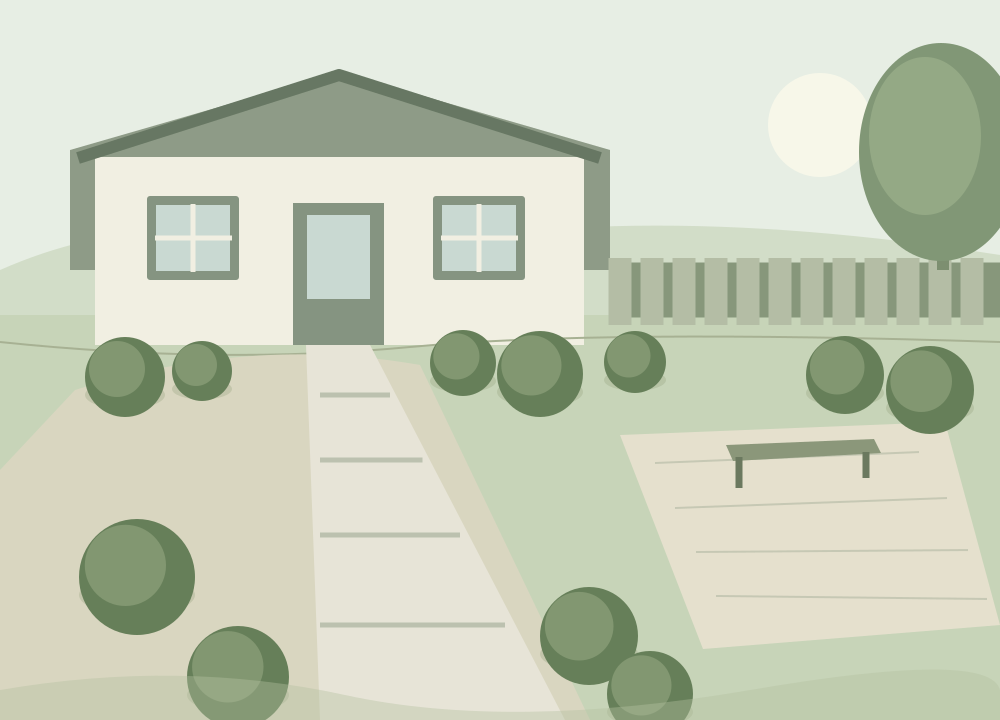
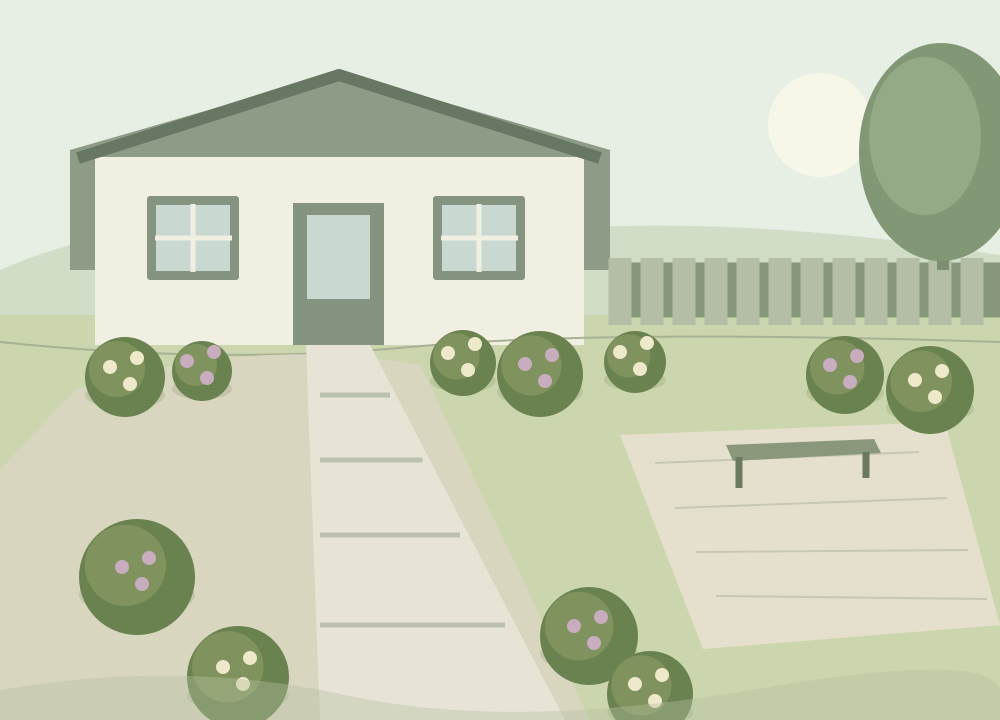
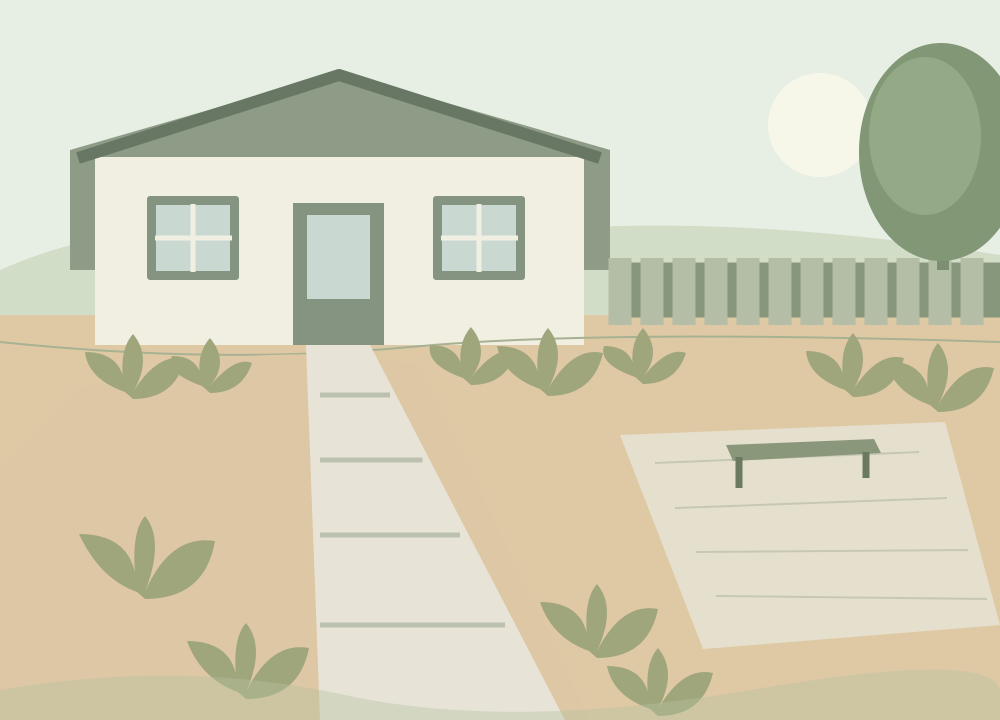
Sample placeholders show the comparison layout. Real project photos and generated results are still being prepared.
Choose the viewpoint and the kind of experience
Decide whether the garden will be seen mainly from a window, enjoyed from a seat, or explored along a route. Those experiences lead to different layouts. A compact view garden can be composed around a single perspective, while a walking garden needs to make sense as the visitor changes position. Begin with the use and the available space before selecting objects.
The New York Botanical Garden's guide describes how foreground, middle ground, and background can create depth. Apply that idea modestly to your own view: a nearby branch or planting edge, a central arrangement, and a quieter boundary may be enough. Keep the composition tied to what exists at the property, including neighboring views you cannot control.
Let space be an intentional part of the composition
Choose a small number of elements and study their relationship before adding more. An open patch can give a tree or stone room to be noticed, while a low planting group can connect two larger forms. Do not treat every gap as a missing feature. The aim is a readable scene in which the eye can rest as well as move.
Test different placements with temporary markers and photographs from the intended viewpoint. Change one element at a time so you can tell what improved the composition. A small shift may matter more than adding another object. Keep practical clearances and access in the test; an arrangement that works only when nobody walks through it may belong in a view garden rather than on a daily route.
Use stone and paths with practical care
If stone is part of the scheme, choose pieces that relate in scale and character. Consider the full arrangement rather than buying individual favorites that compete for attention. Large stones involve handling and installation questions beyond the appearance of the finished garden. Establish the practical method before committing to an object that cannot easily be moved or safely placed.
Paths should suit the people who will use them. A stepping-stone sequence may be attractive in a reference image but inconvenient for moving a cart, using mobility equipment, or walking in poor weather. Keep the essential route comfortable and dependable, then use more contemplative details where they do not compromise everyday access. The cultural inspiration does not remove the need for a usable surface.
Choose locally suitable planting with a clear role
Select plants for the qualities they contribute: branching, a quiet foliage mass, a seasonal change, or a lower connecting layer. Familiar Japanese garden species are not required in every location. Confirm local performance, mature size, and the care the exact cultivar needs. A suitable alternative can support the composition more reliably than a plant chosen only because it appears in many photographs.
Treat pruning as a skill and a continuing responsibility. If the desired form depends on specialized training, decide who will provide that care before choosing it. A naturally expressive tree may be a better fit for a household that wants less detailed maintenance. Verify invasive potential locally, particularly with vigorous spreading plants, rather than assuming that a container or decorative barrier resolves every risk.
Preserve a respectful and maintainable direction
Japanese gardens include distinct traditions and purposes; a small home project should not claim to reproduce all of them. Describe the result as inspired by the qualities you are studying, and learn from established gardens and their own interpretive resources. Avoid relying on a lantern, bridge, or ornamental figure to supply meaning that the layout itself has not developed.
Finish the brief with a view sketch, a limited material palette, plant roles, and a realistic care plan. Revisit the composition through the seasons as foliage changes and branches become more visible. The sample visuals on this site are placeholders and the future generator is coming soon. Use the planning stage to remove unnecessary elements and clarify the experience you want the garden to offer over time.
Plant candidates for zone 7b
This illustrative shortlist assumes zone 7b. These are climate-filtered candidates, not a planting prescription. Check sunlight, drainage, mature size, and local invasive-species guidance. Style matches are editorial suggestions.
| Plant | Type | USDA zones | Light | Mature height |
|---|---|---|---|---|
| Japanese Forest GrassHakonechloa macra | Grass | 5–9.5 | partial shade, full shade | 1–1.5 ft1–2 ft wide |
| Oshima SedgeCarex oshimensis | Grass | 5–9.5 | full sun, partial shade | 1–1.5 ft1–1.4167 ft wide |
| Pennsylvania SedgeCarex pensylvanica | Grass | 3–8.5 | full sun, partial shade, full shade | 0.0833–0.6667 ft0.0833–1 ft wide |
| Creeping PhloxPhlox stolonifera | Groundcover | 4–8.5 | full sun, partial shade, full shade | 0.5–1 ft0.75–1.5 ft wide |
| FoamflowerTiarella cordifolia | Groundcover | 3–8.5 | partial shade, full shade | 0.4167–1 ft1–1.5 ft wide |
| Mondo GrassOphiopogon japonicus | Groundcover | 6–10.5 | full sun, partial shade | 0.5–1 ft0.5–1 ft wide |
| American AlumrootHeuchera americana | Perennial | 4–9.5 | full sun, partial shade | 1–3 ft1–1.5 ft wide |
| August LilyHosta plantaginea | Perennial | 3–9.5 | full sun, partial shade, full shade | 1–2 ft3–4 ft wide |
| Autumn FernDryopteris erythrosora | Perennial | 6.5–12.5 | partial shade, full shade | 1.5–2 ft2–3 ft wide |
| Bigleaf HydrangeaHydrangea macrophylla | Shrub | 6–11.5 | partial shade, full shade | 3–6 ft3–6 ft wide |
| Catawba RhododendronRhododendron catawbiense | Shrub | 4–8.5 | full sun, partial shade, full shade | 6–10 ft8–10 ft wide |
| Chinese Fringe FlowerLoropetalum chinense | Shrub | 7.5–9.5 | full sun, partial shade | 6–8 ft6–8 ft wide |
| Chinese JuniperJuniperus chinensis | Tree | 4–9.5 | full sun | 50–60 ft10–20 ft wide |
| Deodar CedarCedrus deodara | Tree | 7–9.5 | full sun, partial shade | 30–50 ft30–40 ft wide |
| Flowering DogwoodCornus florida | Tree | 5–9.5 | full sun, partial shade | 15–25 ft15–30 ft wide |
| GinkgoGinkgo biloba | Tree | 3–9.5 | full sun | 50–80 ft30–40 ft wide |
Zone numbers ending in .5 mean the b half-zone; whole numbers mean the a half-zone. A matching cold range does not guarantee local suitability. Missing facts are shown as not verified.
A rough material budget, made visible
Illustrative 400 sq ft yard: 200 sq ft of mulched beds, 80 sq ft of paving, and 120 sq ft retained. Plant quantities below are example assumptions. This is a worked example; get local quotes for your own project.
| Material | Quantity | Unit range | Subtotal |
|---|---|---|---|
| 1-gallon perennial | 12 plants | $8–$15 | $96–$180 |
| 3-gallon shrub | 4 plants | $25–$45 | $100–$180 |
| Mulch | 200 sq ft | $0.20–$0.60 | $40–$120 |
| Paving material | 80 sq ft | $1–$25 | $80–$2,000 |
| Illustrative total | $316–$2,480 | ||
Rough estimate, not a quote. Excludes labor, tax, delivery, demolition, soil preparation, permits, and irrigation. Supplied planning ranges have not been independently price-verified for your location. Plant-price reference · Material-price reference. Confirm current supplier quotes before purchasing.
Questions about japanese garden ideas
Do I need a lantern or bridge for a Japanese-inspired garden?
No. Begin with the viewpoint, space, planting, and material relationships. Decorative objects should have a considered role rather than acting as a checklist of symbols.
Can the idea work in a very small courtyard?
Yes, a compact view can be carefully composed. Choose elements at an appropriate scale and keep the practical route through the courtyard usable.
Must all the plants be Japanese species?
No. Select plants that suit your local conditions and contribute the desired form or seasonal character. Exact species and cultivars still need verification.
Is this style automatically low maintenance?
No. Detailed pruning, stone care, weeding, and seasonal work may be significant. Decide how much ongoing care the intended appearance requires.
Can stepping stones be the only access route?
Evaluate the needs of the people using the garden and the expected conditions. A decorative stepping sequence may not be suitable for essential everyday access.
Sources and further reading
- New York Botanical Garden: Japanese Garden Design
- NC State Extension: Landscape Design
- USDA: How to Use the Plant Hardiness Zone Map
Original editorial guide. Examples are illustrative; check site-specific conditions with your local extension service.